Why Strata Painting Requires Long-Term Planning, Not Reactive Repairs
Why do some strata buildings look consistently well-maintained while others seem to need repainting every few years? The answer almost always lies in planning, not paint quality.
Strata painting is rarely just about appearance. It is about asset protection, compliance and cost control. Yet many strata schemes still approach painting reactively, responding only when peeling paint, visible cracking or resident complaints appear. The result is often premature coating failure and rising maintenance costs. This article will explain why a structured, long-term approach delivers far better outcomes.
What long-term planning really means in strata painting
Long-term planning is the disciplined process of condition assessment, specification and lifecycle scheduling. A proper plan considers substrate type, exposure conditions, moisture risks and existing coating integrity. It defines preparation standards, compatible primers and topcoat systems. Most importantly, it sets inspection and maintenance intervals so minor defects are addressed before they escalate. But why does it emphasise the long-term planning process?
Reactive repairs undermine coating performance and budgets
Reactive painting focuses on symptoms rather than causes. From a technical standpoint, it interrupts coating continuity, compromises adhesion and increases the likelihood of early failure. From a financial standpoint, it drives repeated call-outs and unplanned expenditure.
A blistered wall is patched, a peeling balustrade is repainted, and yet moisture ingress, substrate movement or coating incompatibility remains unresolved. This approach creates uneven finishes, inconsistent protection and shortened repaint cycles.
In contrast, long-term planning supports whole-of-life costing. It allows committees to align painting works with capital works budgets rather than emergency levies.
Planning improves safety, access and consistency
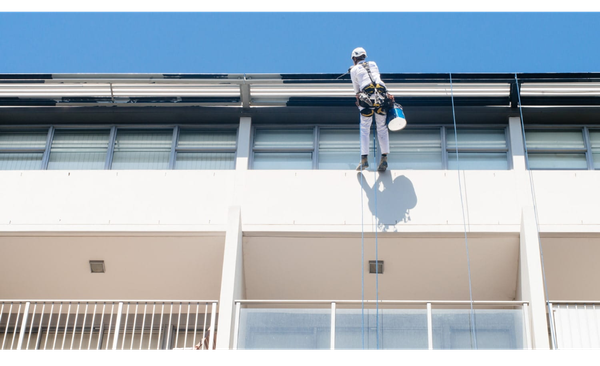
Another overlooked benefit of long-term planning is risk management. Strata buildings often require specialist access methods for upper levels and façades. Planning allows safe access solutions to be integrated into the scope, rather than improvised under pressure.
It also ensures consistency across the entire building envelope. When painting is staged strategically, colour matching, film thickness and detailing remain uniform, protecting both appearance and compliance.
The role of specification and sequencing
Professional strata painting relies on system-based specification. This means each layer, from surface preparation through to the final coat, is selected to work together under real exposure conditions.
For example, exterior masonry in coastal New South Wales demands different primers and film builds compared to sheltered inland walls. Metal components require corrosion treatment before recoating. High-access façades need controlled preparation to ensure consistent surface profiles.
This is where sequencing matters. Cleaning, repair, priming and top coating must occur in the correct order and within defined recoat windows. When steps are skipped or rushed, coating performance is compromised regardless of brand.
Planned expertise helps you preserve value
Strata painting succeeds when it is planned, specified and maintained, not rushed or reactive. Long-term planning delivers technical certainty, financial predictability and durable visual outcomes. It is the difference between short-term fixes and sustainable asset care.
If you want commercial-grade expertise, accredited coating systems and strategic planning, speak with our experts at Premier Painting. We offer structured painting services, proven access solutions and long-term solutions for strata and residential buildings.







.png)

.png)