Rope Access Painting vs Scaffolding vs EWP: Which Is Right for Your Building?
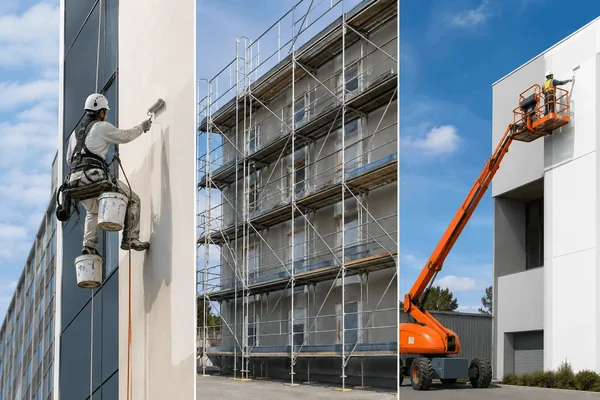
Quick answer: The right height access method for rope access painting depends on building height, geometry, and scope. Rope access suits tall or complex buildings where scaffold hire is impractical or costly. Scaffolding suits large multi-trade projects needing a stable platform. EWPs work well for lower-rise, accessible sites. Premier Painting assesses every building individually and recommends the height access method that delivers the best result safely and efficiently, backed by a 7-year workmanship warranty.
Choosing the wrong height access method for a building repaint can add weeks to the programme, tens of thousands of dollars to the budget, and unnecessary disruption to occupants. Yet for many strata managers, facility managers, and commercial property owners, the difference between rope access painting, scaffolding, and elevated work platforms (EWPs) is not well understood. Each method has a specific application, a different cost profile, and a different set of safety requirements under NSW law. This guide explains the distinctions clearly so you can ask the right questions when a painting contractor presents their access proposal.
The Three Main Height Access Methods for Building Painting
Rope Access Painting (Abseiling)
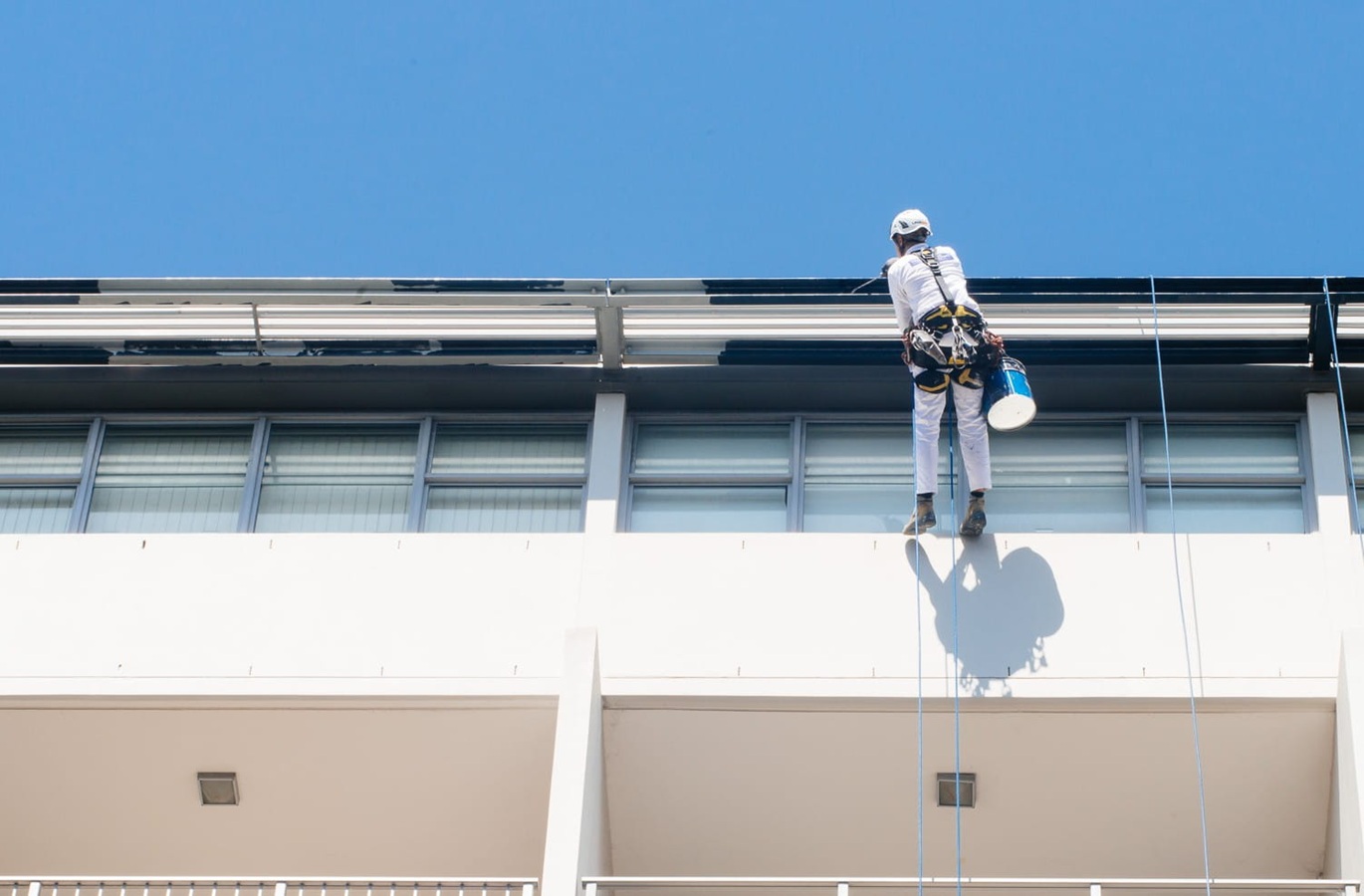
Rope access painting involves painters descending or traversing a building on a two-rope system: a working line and a dedicated safety line. The method is governed by associations such as the Industrial Rope Access Trade Association (IRATA), whose three-level certification programme sets the global standard for rope access safety and competency. In NSW, all rope access work must be accompanied by a Safe Work Method Statement (SWMS), and technicians must hold relevant rope access certification for their level of responsibility.
Rope access painting is not simply abseiling with a paint brush. IRATA-certified rope access painters are trained to work safely at height for extended periods, manage their equipment under load, and execute surface preparation and painting to a professional standard. Premier Painting's team are painters first and IRATA-certified in rope access, not rope access specialists who happen to carry a brush. That distinction matters directly for finish quality.
Scaffolding
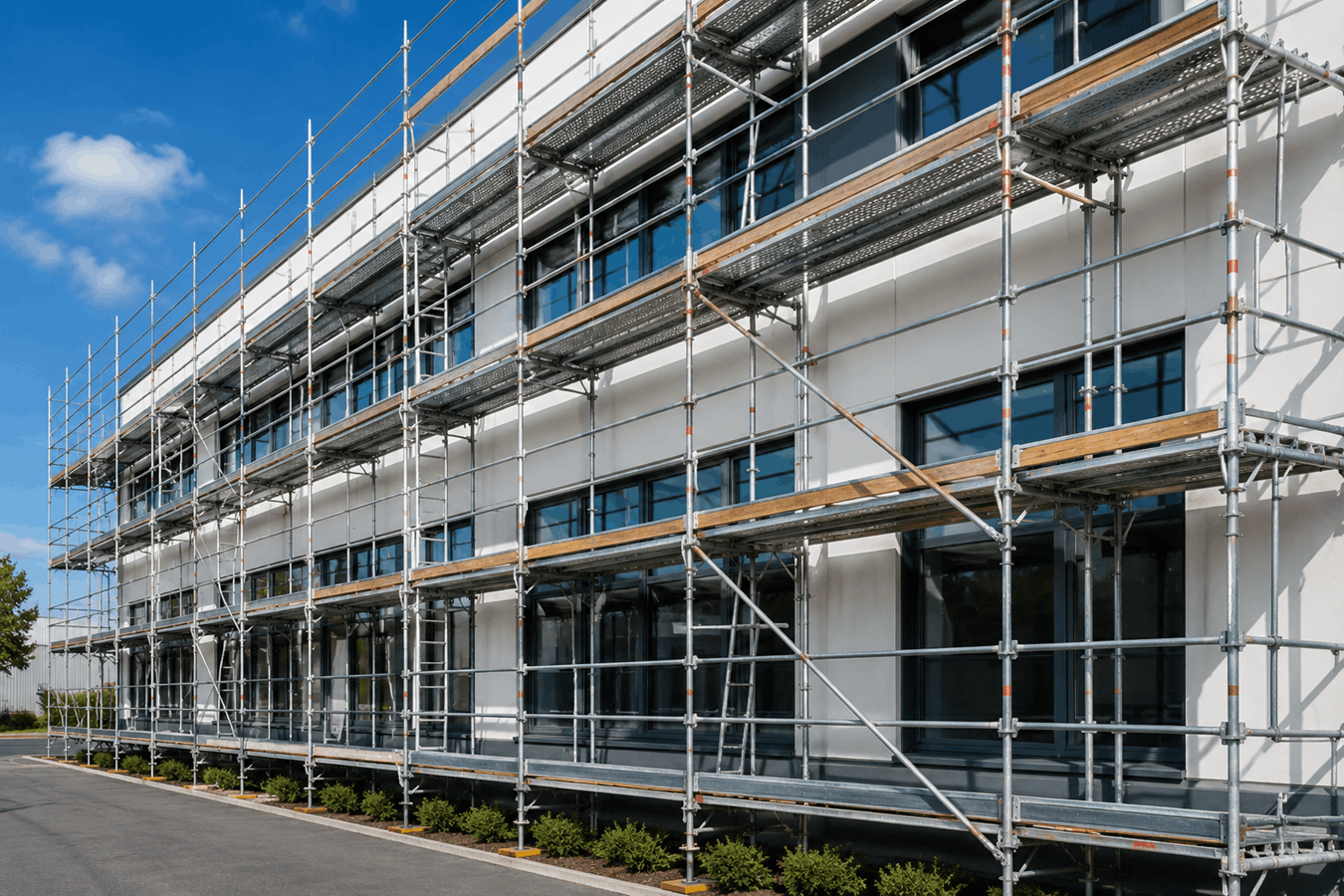
Fixed or modular scaffolding provides a continuous work platform across one or more building faces. It is the most familiar access method and offers several practical advantages: multiple painters can work simultaneously at different levels, heavy equipment and materials can be staged on the platform, and the work surface is accessible without the physical demands of working on rope.
Scaffolding is the access method most strongly supported by the hierarchy of control in Safe Work Australia's Model Code of Practice for Managing the Risk of Falls at Workplaces, which treats passive fall prevention (like a scaffold platform) as preferable to fall arrest systems (like rope) where reasonably practicable. This does not mean scaffolding is always the right answer. It means that any decision to use rope access over scaffolding should be supported by a documented risk assessment justifying why scaffolding is not reasonably practicable for the specific project.
Elevated Work Platforms (EWPs)
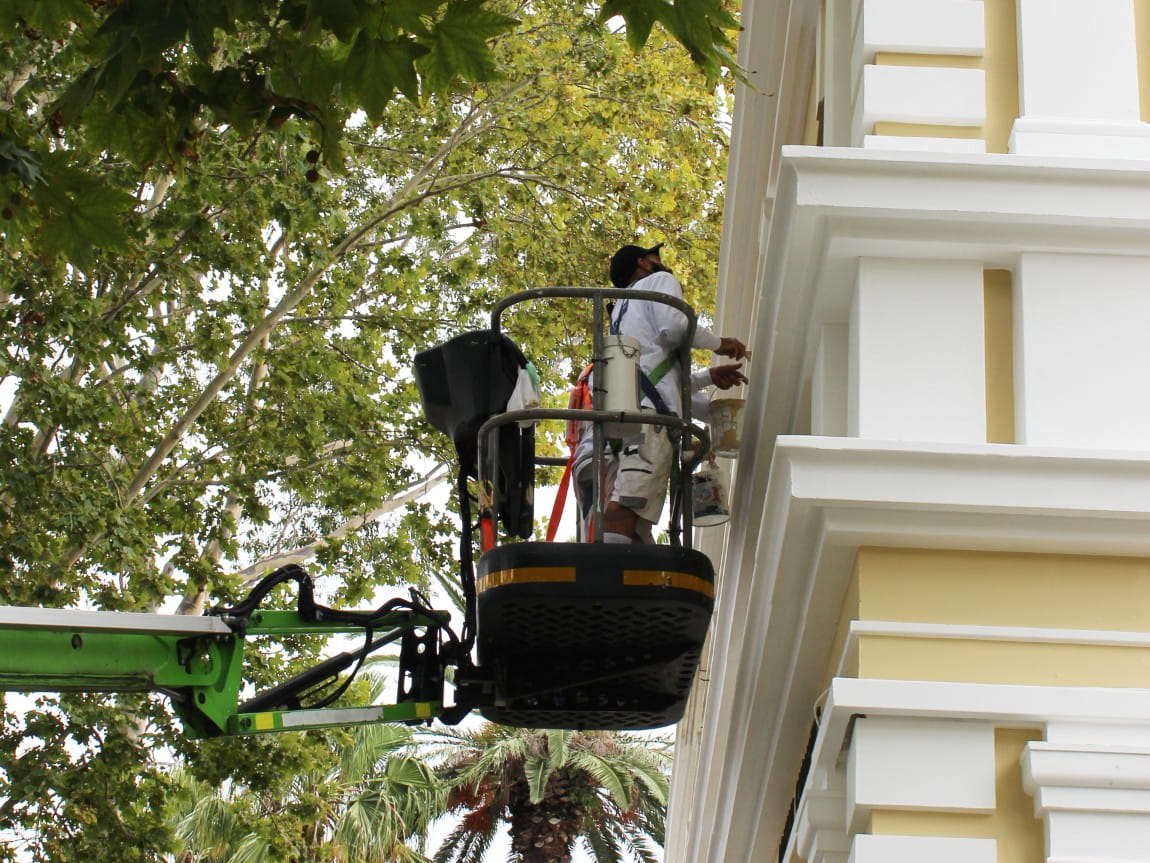
EWPs include scissor lifts, boom lifts, and knuckle booms. They are mobile, self-propelled, and can be repositioned quickly as work progresses across a building. For low- to mid-rise buildings on accessible, level terrain, EWPs are often the most efficient and cost-effective access solution.
SafeWork NSW requires that operators of boom-type EWPs with a boom length over 11 metres hold a high-risk work (HRW) licence, specifically the EWP (boom type) class. The relevant requirements are outlined in the SafeWork NSW Pocket Guide to Construction Safety. EWPs have meaningful practical limitations: they cannot reach above roughly six to eight storeys, they require firm and level ground clearance beneath the building, and they are not suited to sloped or inaccessible terrain. For high-rise buildings or those with limited site access, rope access or scaffolding are the appropriate alternatives.
Rope Access vs Scaffolding vs EWP: Comparison at a Glance
| Factor | Rope Access | Scaffolding | EWP |
|---|---|---|---|
| Best for | Tall, complex, or irregular buildings | Large multi-trade repaints, multi-level access | Low- to mid-rise, accessible ground |
| Height range | Unlimited (subject to anchor points) | Unlimited (subject to design and engineering) | Typically up to 45m working height |
| Certification required | IRATA Level 1-3 or similar + SWMS | Scaffolding licence (depending on type) | HRW licence for booms over 11m |
| Relative cost (tall buildings) | Lower (no scaffold hire) | Higher (erection, hire, dismantling) | Lower-moderate (machine hire + operator) |
| Site disruption | Minimal; no ground obstruction | Moderate to high; scaffold occupies perimeter | Low to moderate; machine footprint only |
| Simultaneous painter access | Limited per drop zone | High; multiple levels at once | Moderate; one EWP per work zone |
| Terrain requirements | Anchor points at roof level required | Ground-level footings required | Level, firm ground required |
When Is Each Height Access Method the Right Choice?
Choose Rope Access Painting When:
- The building is taller than eight storeys, making EWP access impractical
- Ground access around the building is constrained, preventing scaffold erection or EWP positioning
- The project involves targeted maintenance or localised repainting rather than a full building-wide repaint
- Speed of mobilisation is important and a full scaffold cannot be erected in time
- The building has complex geometry such as curved facades, overhangs, or recessed areas that scaffold cannot reach effectively
- Budget for scaffold hire would be disproportionate to the area being treated
Choose Scaffolding When:
- Multiple trades need concurrent access to the building (painters, renderers, waterproofers, glaziers)
- The repaint scope is large enough that productivity gains from a full platform justify the scaffold investment
- Extensive surface preparation is required and painters need a stable, unmoving platform for render repairs, grinding, or pressure washing
- The project timeline accommodates scaffold erection and dismantling as part of the programme
- Materials and equipment need to be staged at height, which is not feasible on rope
Choose an EWP When:
- The building is low- to mid-rise and all areas are accessible from ground level
- The site has firm, level ground around the perimeter that can support the machine's weight and outriggers
- The project is relatively confined and the EWP can be repositioned efficiently as work progresses
- Full scaffold hire would be disproportionate for a smaller or targeted scope of works
Not sure which access method is right for your building? Premier Painting can assess your building in NSW and recommend the most appropriate method for every project. Request a free assessment or call 1300 916 291.
Safety and Regulatory Requirements for Height Access Work in NSW
All three access methods are subject to the Work Health and Safety Act 2011 (NSW) and the associated regulations governing work at heights. The key principle is the hierarchy of control: passive fall prevention measures (platforms, guardrails, scaffolding) are preferred over active fall arrest systems (harnesses, ropes) where reasonably practicable. This does not prohibit rope access but it does require that the choice be risk-assessed and documented.
For rope access specifically, IRATA certification is a recognised standard in Australia. Premier Painting's abseiling painters hold IRATA certification, and every rope access project is managed by a dedicated Project Manager who ensures compliance with the Safe Work Method Statement and site-specific risk assessment.
For EWPs over 11 metres (boom type), a high-risk work licence is required under NSW WHS Regulations. For scaffolding, licensing requirements depend on the type and height of the scaffold. A basic scaffolding licence covers structures up to 4 metres; intermediate and advanced licences are required for more complex or taller structures.
Premier Painting is CM3-accredited, meaning our safety systems, licences, and WHS documentation are independently verified and validated. Every project, regardless of access method, is delivered under a site-specific safety plan.
How Does the Cost of Rope Access Painting Compare to Scaffolding and EWPs?
Cost comparisons between access methods are building-specific and cannot be reduced to a single formula. However, several general principles apply across the Sydney market.
Scaffolding incurs fixed costs regardless of how long painters are on site: erection, weekly hire, dismantling, and engineering for the specific structure. On a 10-storey apartment building, scaffold hire alone can run up to $60,000 or more for a full building repaint. Where rope access can safely deliver the same scope, the access cost is largely absorbed into the painter's day rate, making it significantly more competitive on tall buildings.
EWPs represent a cost-effective middle ground for accessible low-rise buildings. Machine hire typically ranges from $500 to $2,000 per day depending on reach and type, and the machine can cover large areas quickly when the terrain allows. On a three- or four-storey building with open ground access, an EWP will usually be more economical than either rope or scaffold.
The important caveat is that cost should not drive the access decision independently of safety and quality considerations. A method that saves money on access but compromises surface preparation quality or requires painters to work in unsafe conditions is not a saving. Premier Painting assesses access method on the basis of what is right for the building, then works to deliver the most cost-effective solution within that constraint.
Premier Painting Operates Across All Three Access Methods
Many height access contractors specialise in a single method. A rope access-only company will default to rope access regardless of whether scaffolding or an EWP would deliver a better outcome. Premier Painting operates a full range of height access solutions, including rope access and abseiling, swing stages, elevated work platforms, fixed scaffold, and mobile scaffold. We recommend the method that is right for the building, not the method that is most convenient for us.
Our rope access painters are IRATA-certified, but they are painters first. The quality of the paint finish is not an afterthought to the access method. Every project, regardless of access type, has a dedicated Project Manager and Supervisor on site, ensuring the work meets our standards from first coat to final inspection.
For strata managers and commercial property teams working on buildings across Sydney, the Central Coast, and Wollongong, Premier Painting has delivered high-rise and complex-access repaints across every building type: apartment towers, commercial facades, heritage structures, and institutional buildings. Our 28+ years of experience means we have seen and solved the access challenges that more recently established contractors have not encountered.
Planning a High-Rise or Complex-Access Repaint in NSW
Access method selection should be part of the planning process before a quote is issued, not a detail added to a proposal at the end. If you are planning an exterior repaint on a building above three or four storeys, or a building with constrained ground access, a site inspection by an experienced painting contractor is the appropriate starting point.
Access considerations also interact with surface preparation scope. Buildings requiring significant render repair, crack injection, or waterproof membrane application may be better suited to scaffolding than rope access, since preparation works often require a more stable platform. For buildings where waterproofing membrane work is part of the repaint scope, see our article on factors to consider when choosing height access for painting.
Get the Right Access Method for Your Building
Premier Painting assesses every building individually and recommends the access method that delivers the best result safely, efficiently, and within budget. To arrange a site inspection and detailed proposal, call 1300 916 291 or visit premierpainting.com.au/request-a-quote.
Frequently Asked Questions
Is rope access painting safe for high-rise buildings?
Yes, when performed by certified rope-access technicians under a Safe Work Method Statement. Safe Work Australia's hierarchy of control requires that rope access be justified over more passive methods, which means proper risk assessment, trained personnel, and supervised execution are mandatory. Premier Painting's rope access team is IRATA-certified and operates under CM3-accredited safety systems on every project.
What is the difference between rope access and abseiling for painting?
Abseiling and rope access are closely related but not identical. Abseiling refers to descending on a single rope, while certified rope access uses a two-rope system (a working line and a separate safety line) governed by strict certification standards.
When is scaffolding required for painting instead of rope access?
Scaffolding is generally required when multiple trades need simultaneous access, when surface preparation is extensive and painters need a stable work platform, when the project involves heavy equipment or materials that cannot be managed on ropes, or when building geometry makes rope placement impractical. For large strata repaints where several painters need access across a wide facade at once, scaffolding is often the more productive choice.
How much does rope access painting cost compared to scaffolding?
Rope access painting typically costs less than scaffolding for tall or complex buildings because it eliminates scaffold hire, erection, and dismantling costs, which can run to tens of thousands of dollars on a multi-storey project. EWPs are generally more cost-effective than scaffolding for lower-rise work but are limited to accessible terrain and heights. The right method depends on building height, geometry, scope of work, and required access duration.
What certification do rope access painters need in Australia?
Rope access painters in Australia must hold recognised rope access certification. IRATA operates a three-level certification system, with Level 1 being entry level and Level 3 required for supervisory roles. In addition, SafeWork NSW requires a high-risk work licence for certain access methods and mandates a Safe Work Method Statement for all work at height. Premier Painting's rope access team is IRATA-certified.
Can an EWP reach the top of a high-rise building?
Most boom-type EWPs have a working height of 12 to 45 metres, which covers low- to mid-rise buildings. They are not suited to high-rise towers, inaccessible or sloped terrain, or buildings where the machine cannot be safely positioned. For buildings above six to eight storeys, rope access or swing stages are typically the more practical and cost-effective access solution.





.png)

.png)