
Specialist Heritage Finishes Explained: Limewash, Cement Render, Marbling and Rag Rolling
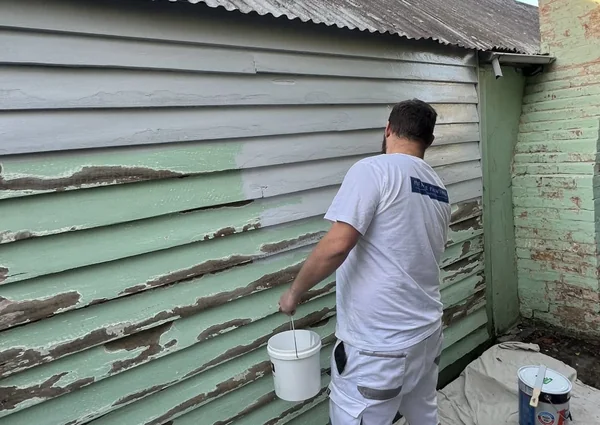
Quick answer: Specialist heritage finishes including limewash painting, cement render, marbling, graining, and rag rolling are purpose-specific techniques required on heritage-listed and pre-1950s buildings in NSW. They preserve substrate integrity, meet heritage compliance requirements, and replicate original decorative schemes. Each requires a qualified, experienced painting contractor. Premier Painting has delivered these finishes across NSW for 28+ years, including for the Historic Houses Trust of NSW.
Not every painting project is a repaint. On heritage-listed and pre-1950s buildings across NSW, the specification of the right finish is as technically demanding as any structural repair. Limewash painting, traditional cement render, marbling, graining, and rag rolling are not decorative choices made on aesthetic grounds alone; they are often compliance requirements, and applying the wrong product to the wrong substrate can cause irreversible damage. This guide explains what each finish is, where it is used, and what makes specialist heritage finishes categorically different from standard painting work.
What Makes Heritage Finishes Different from Standard Painting?
Heritage finishes are defined by their compatibility with original building materials and their ability to support the long-term performance of those materials. The core distinction is breathability.
Most modern paint systems form an impermeable film on the surface. On a contemporary substrate, this is generally desirable. On heritage masonry, sandstone, or lime render, it is problematic: moisture that cannot escape builds up behind the film, leading to spalling, delamination, and accelerated substrate decay.
Heritage finishes such as limewash and traditional lime render are designed to allow moisture exchange. They bond with the substrate rather than sitting on top of it, and they are formulated to be sacrificial: they weather slowly and are periodically reapplied, which is the correct maintenance model for these buildings.
The Burra Charter, Australia's primary ethical framework for heritage practice, establishes that conservation works should use materials and methods compatible with original fabric. This principle underpins every finish decision on a heritage project.
Limewash Painting: What It Is and Where It Is Used
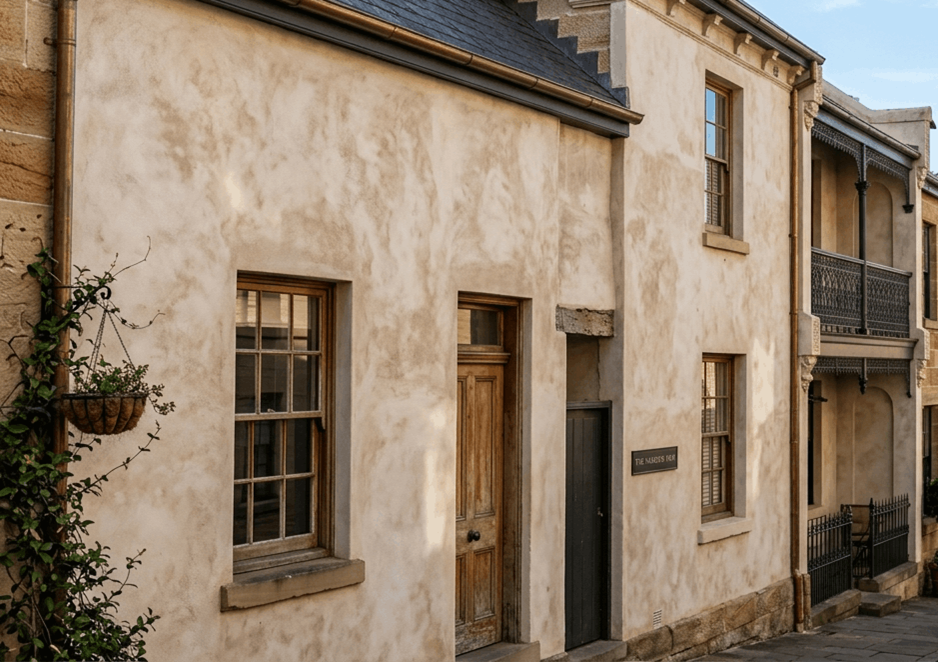
Limewash paint is produced from slaked lime, calcium hydroxide, mixed with water and, where required, natural pigments. It is one of the oldest paint systems in use and remains the correct specification for a range of heritage substrates in NSW.
When applied to a porous masonry surface, limewash penetrates the substrate and carbonates as it cures, forming a durable but breathable layer that becomes part of the surface rather than a film above it. The characteristic soft, mottled appearance of a correctly applied limewash is a function of this process and is not replicable with modern products.
Where limewash is typically specified
- External sandstone and brick facades on colonial and Federation-era buildings
- Lime-rendered external walls where the original finish was limewash
- Internal masonry walls in convict-era and early colonial structures
- Heritage outbuildings, garden walls, and boundary structures
The Heritage Council of NSW Maintenance Series provides technical guidance on traditional lime-based finishes, specifically addressing the breathability requirements of heritage masonry and why limewash is preferred over modern alternatives for these substrates.
Heritage Cement Render: Composition and Correct Application
Traditional heritage cement render differs significantly from modern sand-and-cement systems. Heritage render typically uses a high lime-to-cement ratio or, in pre-20th-century buildings, pure lime mortar without Portland cement to maintain the flexibility and breathability of the substrate.
Victorian and Edwardian architecture across Sydney and the Central Coast features render profiles including stucco, roughcast, and pebbledash. Each has specific composition requirements and application methods. Replacing or repairing these with modern high-cement-content renders is a common and damaging error: the harder, less permeable render creates differential movement stresses that crack the original substrate over time.
Heritage Victoria's Technical Leaflets on external renders detail the composition of traditional stucco and lime wash systems used across Victorian and Edwardian architecture, directly applicable to the significant stock of that period across Sydney's inner suburbs and the Central Coast.
Premier Painting delivers specialist heritage finishes as part of a full commercial painting service across Sydney, Central Coast, and Wollongong. Every heritage project is assessed by a dedicated Project Manager with direct experience in this sector.
Marbling and Graining: Specialist Decorative Techniques for Heritage Interiors
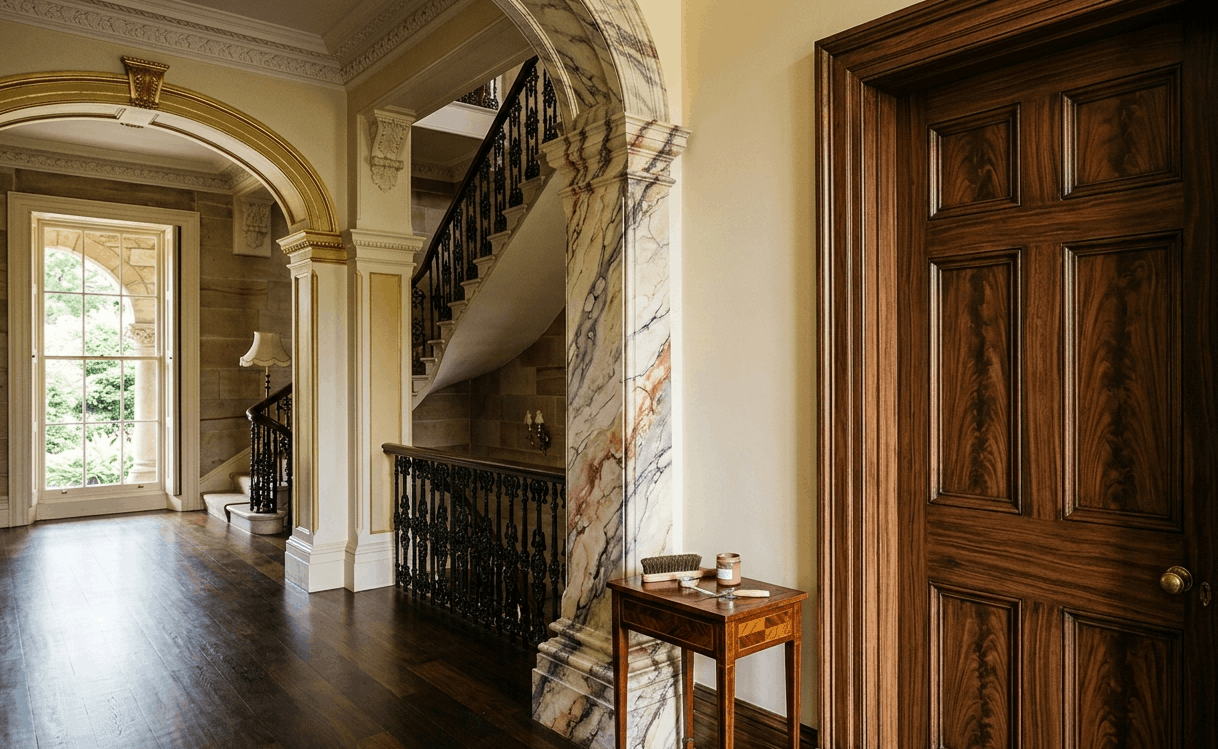
Marbling and graining are hand-applied decorative painting techniques that simulate the appearance of natural stone and timber respectively. Both were widely used across Australian heritage interiors from the Victorian era through to the early twentieth century as a cost-effective way to replicate expensive materials.
Marbling is applied using layered transparent glazes over a base coat, with veining and surface variation built up using brushes, sponges, and feathers. The technique requires a detailed understanding of the geological appearance of the marble being replicated. Graining follows a similar layered glaze approach, using specialist combs, rockers, and brushes to replicate the grain patterns of timbers including oak, walnut, and mahogany.
Both techniques are used in heritage restoration where existing decorative finishes survive and need to be extended, repaired, or replicated. The National Trust of Australia recognises the importance of traditional decorative trades in maintaining the authentic aesthetic of historic interiors.
Common applications in NSW heritage projects
- Interior columns, pilasters, and capitals in civic and commercial buildings
- Entrance hall and stairwell joinery: newel posts, balustrades, and skirting boards
- Architraves, cornices, and dado panelling in period homes
- Public buildings including courthouses, libraries, and government offices
Rag Rolling: A Heritage Wall Finish That Remains in Active Use
Rag rolling is a specialist decorative painting technique in which a rolled or twisted rag is used to apply or remove glaze from a wet base coat, producing a soft, irregular textured finish. It was a standard interior wall treatment in Australian homes and public buildings through the Victorian and Federation eras.
In a heritage restoration context, rag rolling is used where original painted schemes incorporated this finish and need to be replicated accurately. It is also used where heritage conditions of consent require the retention or reinstatement of period decorative treatments. The finish is not achievable with standard roller or brush application and requires a contractor experienced in decorative paint techniques.
For guidance on what restoration works may require specialist finishes on NSW heritage properties, see the do's and don'ts of renovating heritage properties, which covers the most common errors made by contractors unfamiliar with heritage requirements.
Specialist Heritage Finishes at a Glance
The table below summarises the five specialist finishes covered in this guide, the substrates they are applied to, and their typical use in NSW heritage projects.
| Finish | Substrate | Typical Use | Heritage Era |
|---|---|---|---|
| Limewash | Sandstone, brick, lime render | External walls, masonry facades | Colonial to Federation |
| Cement render | Masonry, brick | External walls, heritage facades | Victorian, Edwardian |
| Marbling | Plaster, timber | Interior columns, joinery, architraves | Victorian to Edwardian |
| Graining | Timber, plaster | Doors, skirting, joinery | Colonial to Art Deco |
| Rag rolling | Plaster, render | Interior walls and ceilings | Victorian to Federation |
Why Heritage Buildings Require a Specialist Painting Contractor
The key risk on a heritage painting project is not poor workmanship in the conventional sense. It is applying the wrong product to the wrong substrate. A standard acrylic applied over a limewash surface may look acceptable on completion and begin failing within twelve months as trapped moisture works against the surface film. Repairing that failure on a heritage building is more complex and more costly than specifying the correct system from the outset.
Heritage painting contractors must understand substrate compatibility, moisture management, and the requirements of relevant heritage authorities. For further context on the specific challenges involved, see why heritage properties are harder to paint.
Premier Painting has been the preferred painting contractor for the Historic Houses Trust of NSW for over a decade. Our work includes Government House, Hyde Park Barracks, and NSW Parliament among the most demanding heritage painting projects in the state. All staff attending government and heritage sites are background-screened, and every project is managed by a dedicated Project Manager with direct heritage sector experience.
Our full range of commercial painting services includes heritage and government building painting across Sydney, Central Coast, and Wollongong.
Speak to Premier Painting About Your Heritage Building Project
If your building requires specialist heritage finishes, Premier Painting can assess the scope and provide a detailed, itemised proposal. Call 1300 916 291 or request a free quotation and a Project Manager will be in touch.
Frequently Asked Questions
What is limewash paint and how is it different from standard paint?
Limewash paint is made from slaked lime mixed with water and natural pigments. Unlike modern acrylic or oil-based paints, limewash is breathable; it allows moisture to pass through the substrate rather than trapping it behind a surface film. This is essential on heritage masonry, where trapped moisture causes spalling, cracking, and long-term structural damage. Standard paint systems are not appropriate for these substrates.
Can you paint over limewash?
Painting over limewash requires careful preparation and the right product choice. Applying a standard acrylic directly over an existing limewash finish can trap moisture and cause delamination. In most heritage contexts, the preferred approach is to reapply a compatible lime-based system rather than overpaint with a modern product. A specialist contractor should assess the existing finish and substrate condition before specifying the next coat.
What surfaces are limewash finishes suitable for?
Limewash is most suitable for porous masonry substrates including sandstone, brick, render, and lime mortar joints. It is not suitable for modern cement renders, painted surfaces, or non-porous materials. Its performance depends on the substrate's ability to absorb the limewash and allow moisture exchange. A site inspection by an experienced heritage painting contractor will confirm suitability before any application.
What is marbling or graining in a heritage painting context?
Marbling and graining are specialist decorative painting techniques that replicate the appearance of natural stone and timber respectively. Applied by hand using layered glazes and specialist tools, they were widely used in Australian heritage interiors from the Victorian era onwards to simulate expensive materials on columns, joinery, and architraves. Executed correctly, they are indistinguishable from the genuine material at normal viewing distance.
Is rag rolling still used in heritage building restoration?
Yes. Rag rolling is a legitimate heritage finish technique used to restore and replicate period interior wall treatments. It produces a soft, textured appearance consistent with original decorative schemes on pre-1950s interiors. Where existing rag-rolled finishes survive, matching them with the correct technique and compatible products is both a practical and heritage compliance requirement under the Burra Charter principles.
What paint systems are appropriate for heritage-listed buildings in NSW?
Heritage-listed buildings in NSW are generally required to use paint systems compatible with original materials and that allow the building to breathe. The Heritage Council of NSW Maintenance Series provides technical guidance on appropriate finishes. Lime-based systems are preferred for external masonry; traditional oil-based or appropriate acrylic systems may be specified for joinery and metalwork, depending on substrate and heritage listing conditions.
Do heritage finishes require a specialist painting contractor?
Yes. Heritage finishes including limewash, marbling, graining, and rag rolling require specialist skills not part of standard commercial painting practice. Incorrect application can cause substrate damage, delamination, and non-compliance with heritage conditions of consent. Premier Painting has delivered specialist heritage finishes across NSW for 28+ years and is the preferred painter for the Historic Houses Trust of NSW.
How do I know if my building requires heritage-appropriate finishes?
If your building is listed on the NSW State Heritage Register, identified in a local council Heritage Conservation Area, or subject to a heritage listing condition in a Development Approval, heritage-appropriate finishes are typically a requirement. Your heritage architect or building consultant will specify the appropriate system. Premier Painting works alongside heritage consultants to deliver compliant outcomes across Sydney, Central Coast, and Wollongong.








.png)

.png)