Aged Care Facility Painting in NSW: Safe Paints, Colour and Compliance
By Tony Conway, Managing Director, Premier Painting Company
Quick answer: Commercial painting in aged care facilities in NSW requires careful product selection, a structured approach to minimising resident disruption, and alignment with the Strengthened Aged Care Quality Standards. Low-VOC paint systems protect the health of residents with respiratory sensitivities; colour psychology supports dementia care and resident wellbeing; and scrubbable, durable finishes underpin infection control compliance. Premier Painting has delivered commercial painting across Sydney healthcare and aged care facilities for 28+ years, backed by a 7-year workmanship warranty.
Commercial painting in an aged care facility is not the same as a standard commercial repaint. The residents living in these buildings are often frail, with respiratory sensitivities, vision impairments, or cognitive conditions such as dementia. The painting program has to work around their care schedules without disrupting clinical operations. And the paint products and finishes selected carry obligations beyond aesthetics, supporting infection control, resident safety, and compliance with the Strengthened Aged Care Quality Standards that apply across NSW from 1 November 2025. For facility managers and operators planning a repaint, understanding these requirements upfront makes for a better project, a better outcome, and a stronger compliance position.
Why Aged Care Facility Painting Has Different Requirements to Standard Commercial Painting
Aged care facilities sit at the intersection of residential and clinical environments. They must feel welcoming and homelike for residents while maintaining the hygiene, durability, and safety standards of a healthcare setting.
This creates specific painting requirements that differ from a typical office building or retail fitout. Product selection, colour strategy, surface preparation, and scheduling all need to be calibrated to the aged care context. The consequences of getting these wrong are not just cosmetic: unsuitable paint products can cause respiratory irritation in vulnerable residents; poor colour specification can increase confusion and falls risk; inadequate surface preparation shortens the life of the coating and increases maintenance costs.
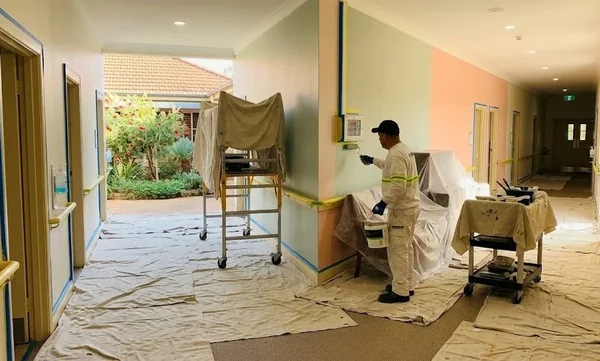
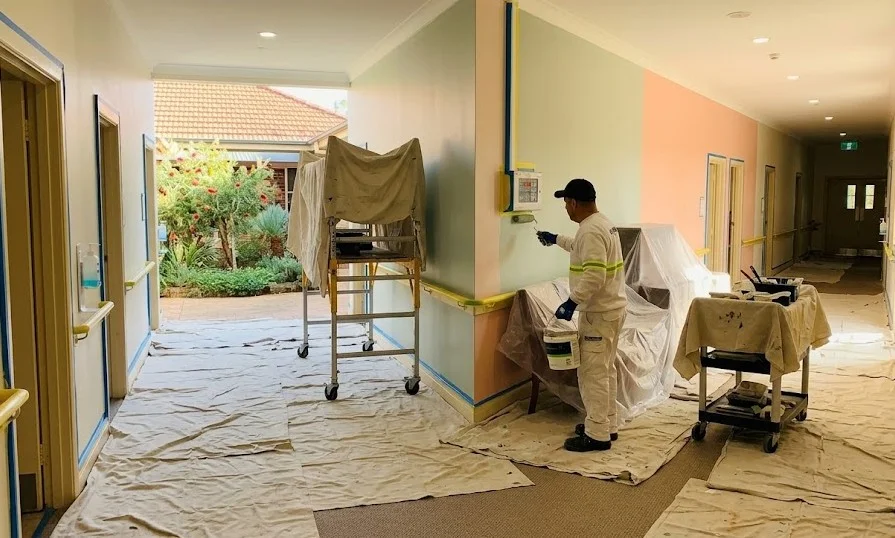
Premier Painting has delivered commercial painting programs in healthcare and aged care environments across Sydney for over 28 years, including works at Malabar Aged Care. Our Project Managers bring structured protocols to every aged care project, covering product specification, staging, resident safety management, and site communication with facility staff.
Low-VOC and Zero-VOC Paints: Why They Are the Standard Specification for Aged Care in NSW
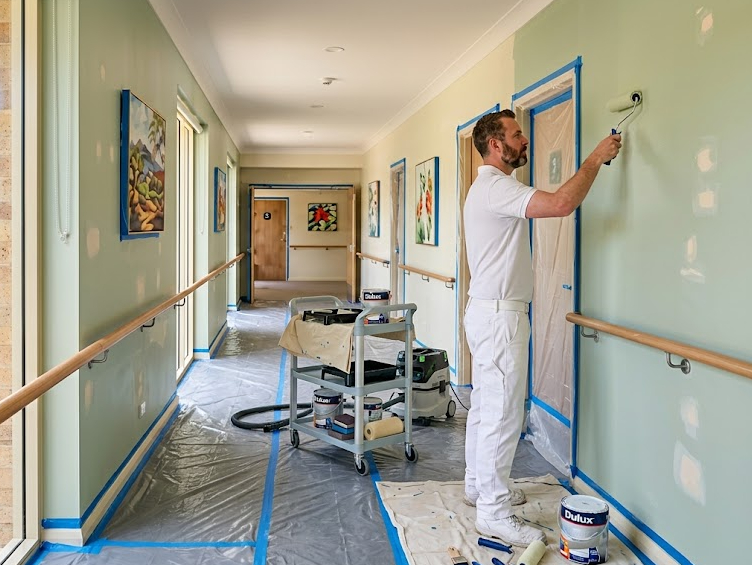
Low-VOC and zero-VOC water-based paint systems are the appropriate and expected specification for interior works in aged care facilities. VOCs (volatile organic compounds) are chemical compounds released from paint during and after application. Conventional paints can contain significant VOC concentrations that produce odour and can irritate the respiratory system, eyes, and skin.
In an aged care setting, this matters considerably. Many residents have pre-existing respiratory conditions, reduced immune function, or heightened sensitivity to chemical exposure. Even low-level VOC exposure during or after painting can cause discomfort or health impacts in this population. Low-VOC and zero-VOC systems minimise this risk, dry faster, and allow rooms to return to use sooner after painting is completed.
Pro tip: When specifying paint systems for aged care, request the product's Safety Data Sheet (SDS) from your contractor and confirm the VOC content in grams per litre. Products marketed as 'low odour' are not necessarily low-VOC. Ask for both figures.
Dulux offers a range of low-VOC and washable commercial systems suited to aged care applications, including products with scrubbability ratings appropriate for high-traffic corridors, dining rooms, and bathrooms. As Dulux Accredited Painters, Premier Painting can specify and apply the correct Dulux system for each area of your facility.
Colour Psychology and Dementia-Friendly Colour Strategy in NSW Aged Care Facilities
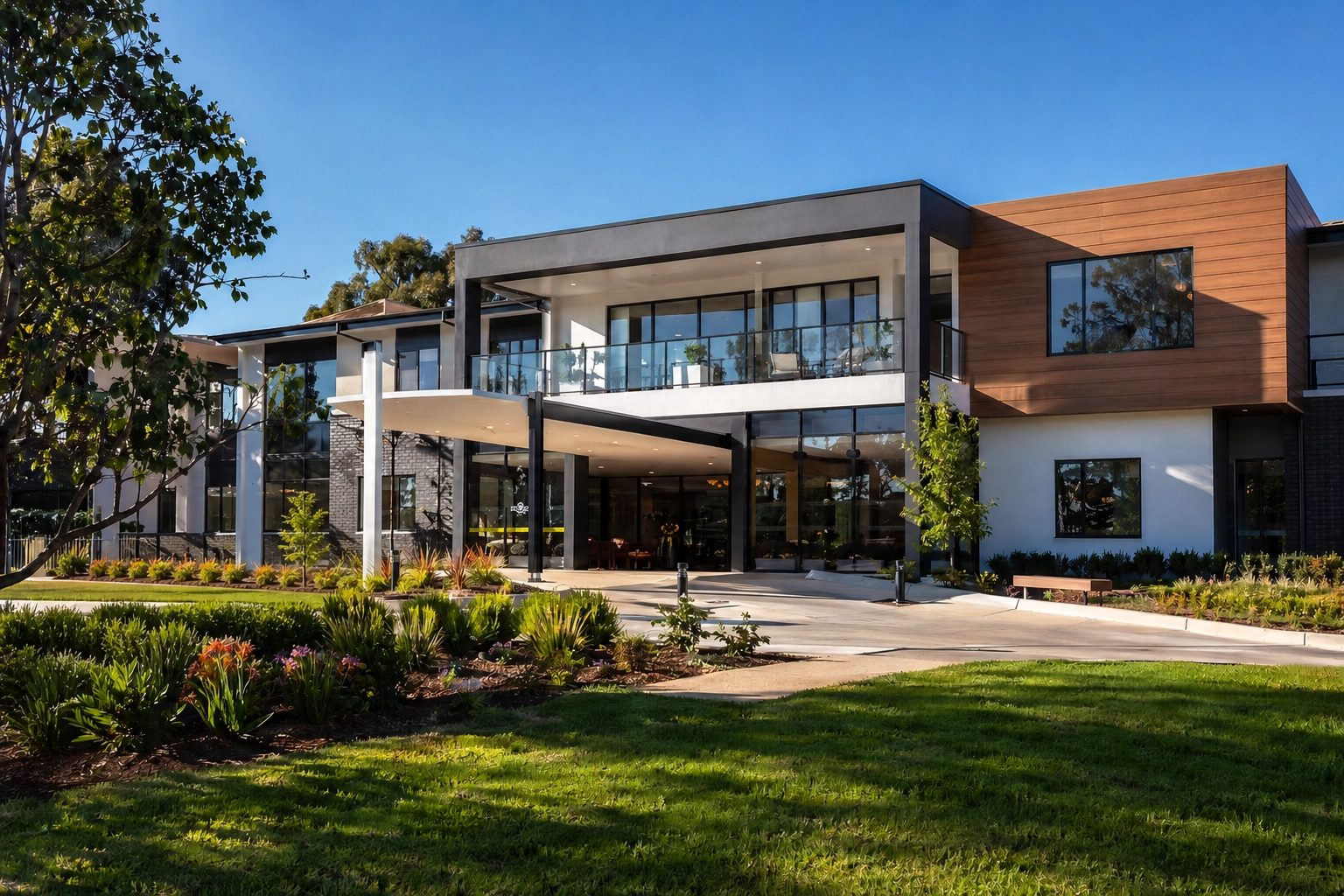
Colour selection in aged care is not purely decorative. In facilities housing residents with dementia or cognitive decline, colour contrast and zoning perform a functional role: supporting orientation, reducing anxiety, and improving safety.
Evidence-based guidance used in Australian aged care design includes:
- Contrast between surfaces: Using contrasting colours between walls, door frames, floors, and skirting boards helps residents with vision impairment or dementia distinguish vertical and horizontal surfaces, reducing falls risk.
- Colour zoning for wayfinding: Distinct colours or tones assigned to different areas (dining, lounge, corridors, bathrooms) help residents navigate independently. A clearly contrasting bathroom door colour, for instance, reduces confusion and incidents.
- Warm neutrals for resident rooms: Soft warm tones such as warm whites, creams, and earthy neutrals reduce the clinical feel and create a more homelike, calming environment. These tones are associated with reduced anxiety and increased comfort.
- Avoid all-white interiors: Uniform white or pale grey schemes can feel institutional and reduce a resident's ability to distinguish spaces and features. Thoughtful variation supports both wellbeing and practical navigation.
- Soft greens and blues in common areas: These tones are associated with calm and reduced stress, well-suited to lounges and communal spaces where residents spend significant time.
Premier Painting works with facility managers on colour strategy as part of the repaint planning process. Where a qualified colour consultant is required, we can coordinate referrals as part of the project brief.
Common mistake: Treating colour selection as a decision made after the contractor is appointed. Colour strategy for aged care involves input from facility management, care staff, and often residents or families. Building this into the project planning stage avoids delays and ensures the colour scheme supports resident wellbeing from day one.
How Painting Supports Compliance with the Strengthened Aged Care Quality Standards
The Strengthened Aged Care Quality Standards, effective from 1 November 2025 under the Aged Care Act 2024, set clear expectations for the physical environment in which aged care is delivered. Standard 4 specifically addresses the environment, requiring that it be well-maintained, safe, and supportive of resident wellbeing.
Professional painting supports this obligation directly in several ways:
- Infection control surfaces: High-quality, scrubbable, washable paint finishes allow walls and surfaces to be cleaned effectively without degrading the coating. Deteriorated or porous surfaces become harder to clean and can harbour bacteria. Maintaining surfaces in good condition is part of the infection control framework required under the Standards.
- Physical safety: Colour contrast between walls, floors, and fixtures reduces falls risk for residents with vision impairment. Visible, clearly differentiated door colours assist independent navigation and reduce behavioural incidents associated with confusion.
- A homelike and dignified environment: The Standards explicitly move away from a clinical, institutional aesthetic. Thoughtful colour schemes, warm tones, and well-presented surfaces contribute to the homelike environment regulators expect.
- Proactive maintenance: Regulatory audits under the Strengthened Standards look for evidence of proactive maintenance planning, not reactive patching. A documented painting maintenance schedule demonstrates good governance and asset management.
For guidance on compliance obligations, the Aged Care Quality and Safety Commission publishes resources on the Aged Care Quality Standards and infection prevention and control requirements at agedcarequality.gov.au.
Premier Painting's commercial painting services cover the full scope of aged care and healthcare facility repaints across Sydney, the Central Coast, and Wollongong. Our Project Managers can assess your building and provide a detailed, itemised proposal before any work begins.
Managing Painting Works Around Residents, Care Schedules, and Clinical Operations
Disruption management is one of the most critical aspects of an aged care painting project. The facility does not close for a repaint. Residents are present, clinical care continues, and the contractor must operate within the rhythms of the facility.
An experienced commercial painting contractor operating in aged care will approach this through several mechanisms:
- Staged zone-by-zone programs: Painting work proceeds area by area, keeping the majority of the facility operational. Residents in affected zones are temporarily relocated or works are scheduled during low-occupancy periods.
- Scheduling around care activities: Painting is planned to avoid mealtimes, medication rounds, morning care, and physiotherapy or activity sessions. A dedicated Project Manager coordinates with the facility's operational schedule daily.
- Low-VOC products for faster room return: Products with low VOC content and fast-drying formulations allow painted rooms to return to use sooner, reducing the duration of any temporary relocation.
- Resident and family communication: Where works are occurring near resident rooms or communal areas, clear advance communication from the facility management team supported by the contractor ensures no surprises.
- Daily site communication: On complex aged care projects, our Project Manager maintains daily contact with the facility manager or maintenance coordinator to adjust workflow as care needs evolve.
Premier Painting's commercial painting team has experience managing projects in live care environments. Every project has a dedicated Project Manager who coordinates directly with facility staff throughout the works. For further detail on how we manage complex commercial projects, see our guide to project management for commercial painting.
What Facility Managers Should Ask When Obtaining Quotes for an Aged Care Repaint
When assessing proposals from commercial painting contractors for an aged care facility repaint, facility managers should ask the following:
- What is the VOC content of the specified products? Ask for the VOC content in g/L from the product data sheet, not just a general assurance of 'low odour' or 'safe.' Confirm whether the system is appropriate for areas where residents will be present during drying.
- What is the proposed staging and scheduling plan? A reputable contractor will have a draft staging plan at the quotation stage, not just a start date. This should include sequencing, room-return timelines, and proposed working hours.
- Is there a dedicated Project Manager assigned? Aged care repaints require active site coordination. Ask who will be on site daily and how issues will be escalated.
- What surface preparation is included? Paint longevity depends on substrate preparation. Confirm that the scope includes crack filling, cleaning, priming, and any required patch repairs, not just a topcoat.
- What warranty applies? Ask for both the workmanship warranty (ideally 7 years) and the manufacturer product warranty. Premier Painting provides a 7-year workmanship warranty on all commercial painting works, with Dulux manufacturer warranties available on Dulux-specified systems.
- Does the contractor have experience with aged care or healthcare environments? Ask for references from comparable environments. Familiarity with the care setting means fewer problems during the project.
TL;DR: Aged Care Facility Painting in NSW at a Glance
- Low-VOC and zero-VOC paint systems are the standard specification for interior aged care painting in NSW, protecting residents with respiratory sensitivities and allowing rooms to return to use faster.
- Colour strategy supports resident wellbeing and dementia care: contrast between surfaces aids wayfinding and safety; warm neutrals reduce clinical feel; colour zoning helps residents orient independently.
- The Strengthened Aged Care Quality Standards require a well-maintained physical environment. Good painting practice, from scrubbable finishes to proactive maintenance schedules, supports compliance directly.
- Effective disruption management (staged works, low-VOC products, daily coordination with facility staff) allows painting programs to proceed without compromising resident care.
- Premier Painting has delivered commercial painting in aged care and healthcare facilities across Sydney for 28+ years, including Malabar Aged Care. All projects are managed by a dedicated Project Manager and backed by a 7-year workmanship warranty.
- Next step: contact Premier Painting for a free quote: 1300 916 291 or request a quotation online.
Get a Quote for Your Aged Care Facility Repaint
Ready to plan your next aged care facility repaint? Call us on 1300 916 291 or request a free quotation online. Our Project Managers assess facilities across Sydney, the Central Coast, and Wollongong and provide detailed proposals covering product specifications, staging plans, and applicable warranties.
Frequently Asked Questions
What type of paint is required for aged care facilities in Australia?
Low-VOC or zero-VOC water-based paints are the standard specification for aged care facilities in Australia. These products minimise airborne chemical emissions during and after application, which is important for residents with respiratory conditions. High-traffic surfaces such as corridors, bathrooms, and dining areas additionally require commercial-grade scrubbable finishes that support infection control cleaning protocols.
How does painting support compliance with the Aged Care Quality Standards in NSW?
Under the Strengthened Aged Care Quality Standards, Standard 4 requires the physical environment to be well-maintained, safe, and supportive of resident wellbeing. Well-specified painting directly supports this obligation: durable, scrubbable finishes assist infection control; colour contrast aids wayfinding and safety for residents with vision impairment or dementia; and a maintained, homelike environment contributes to resident dignity and comfort. Proactive painting maintenance is increasingly part of regulatory audit expectations.
What colours should be used in an aged care facility for dementia residents?
Evidence-based guidance recommends soft, warm neutrals for resident rooms and corridors to reduce anxiety and create a homelike feel. Colour contrast between walls, doors, and floor surfaces is essential for wayfinding: high-contrast door frames and feature colours help residents with dementia locate bathrooms, dining rooms, and communal areas. Avoid all-white interiors, which can feel clinical, and avoid high-intensity colours in corridors, which can cause overstimulation.
How do commercial painters minimise disruption in a working aged care facility?
Staged painting programs allow work to proceed zone by zone, keeping most of the facility operational at all times. Scheduling painting outside peak care periods (mealtimes, medication rounds, morning care) reduces disruption to residents and staff. Low-VOC paints dry faster and produce less odour, allowing rooms to return to use sooner. A dedicated Project Manager coordinates staging and daily communication with the facility team throughout the project.
How often should an aged care facility in NSW be repainted?
Interior repaints for high-traffic areas such as corridors, dining rooms, and bathrooms are typically required every 5 to 7 years, depending on surface condition and cleaning frequency. Resident rooms may extend to 7 to 10 years with appropriate touch-up maintenance between full repaints. Exterior repaints for aged care buildings generally align with commercial maintenance schedules of 7 to 10 years. A planned maintenance schedule developed with your contractor is the most cost-effective approach.
Does Premier Painting have experience with aged care facility painting in Sydney?
Yes. Premier Painting has painted aged care and healthcare facilities across Sydney as part of its commercial painting program, including works at Malabar Aged Care. As a Dulux Accredited commercial painting contractor with 28+ years of experience, Premier Painting applies structured protocols for product selection, resident safety, staging, and infection control during painting works. All projects include a dedicated Project Manager and are backed by a 7-year workmanship warranty.
Related Guides
- Commercial painting services for Sydney, Central Coast, and Wollongong
- Waterproof membrane coatings for strata buildings in NSW
- Project management for commercial painting: what to expect
- Commercial exterior painting guide for facility managers
- Checklist for commercial exterior painting projects
- 7 steps to ensure a flawless commercial paint finish
About Premier Painting Company: Premier Painting has delivered commercial, strata, and residential painting across Sydney, the Central Coast, and Wollongong for 28+ years. We are Dulux Accredited Painters, a member of Master Painters Australia, CM3-accredited, and a recognised Strata Services Specialist Company. Our aged care and healthcare projects are managed by dedicated Project Managers with all work backed by a 7-year workmanship warranty. Contact us on 1300 916 291 or visit premierpainting.com.au.







.png)

.png)