How to Plan a High-Rise Exterior Repaint: Access, Timeline and Disruption Management
By Tony Conway, Managing Director, Premier Painting Company
Quick answer: Planning a high rise building exterior painting project starts with matching the access method (rope access, EWP, swing stage or scaffold) to the building's height, streetscape and facade design, then sequencing work by elevation and communicating clearly with residents before it begins. Premier Painting has planned high-rise access and disruption schedules across Sydney, Central Coast and Wollongong for 28+ years, with every project scoped by a dedicated Project Manager before any access method is confirmed.
Planning a high rise building exterior painting project is as much a logistics exercise as a painting job. Choose the wrong access method and you are paying for scaffold hire for weeks before a brush touches the wall. Get the timeline wrong and residents, tenants or the public absorb the disruption. These projects succeed or fail on what happens before work starts: the access method selected, the sequence the building is worked in, and how clearly the project is communicated to the people who live or work inside it.
What determines the right access method for a high-rise repaint?
The right access method for a high-rise repaint depends on the building's height, facade design and the streetscape around it, not on which method a contractor happens to specialise in. A narrow inner-city site with heavy footpath traffic favours a different solution to a freestanding tower with clear ground space on all sides.
Four factors typically decide the method: the building's height and available anchor points, the width of clear space at ground level, the complexity of the facade (balconies, cornices, recessed sections) and how much disruption the building can tolerate during the works. Safe Work Australia's Model Code of Practice for managing the risk of falls at workplaces sets the safety baseline every method must meet, regardless of which one is selected.
At Premier Painting, the access recommendation is based on what suits the property, not the equipment on the truck. Our painters hold IRATA certification for rope access work, but they are painters first and abseilers second: trained to deliver a consistent, flawless finish at height, with rope access as one method among several rather than the default answer to every job. That distinction matters. A technically competent abseiler without a painter's eye for finish consistency and colour matching can leave a technically safe but visually inconsistent result.
Comparing high-rise access methods: rope access, EWP, swing stage and scaffold
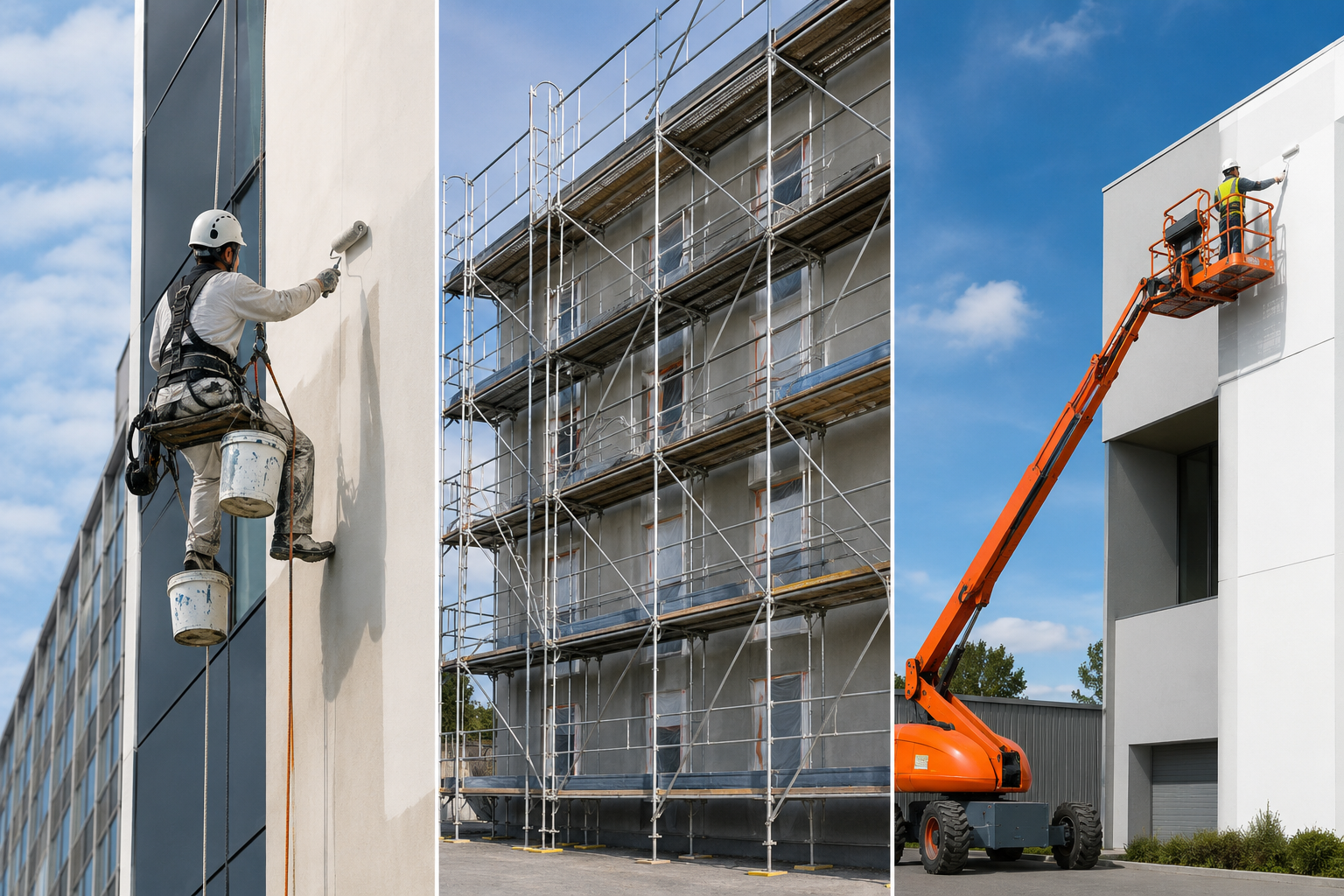
Each access method carries a different cost, disruption and setup profile. The table below compares the four most common methods used for high rise building exterior painting across Sydney, the Central Coast and Wollongong.
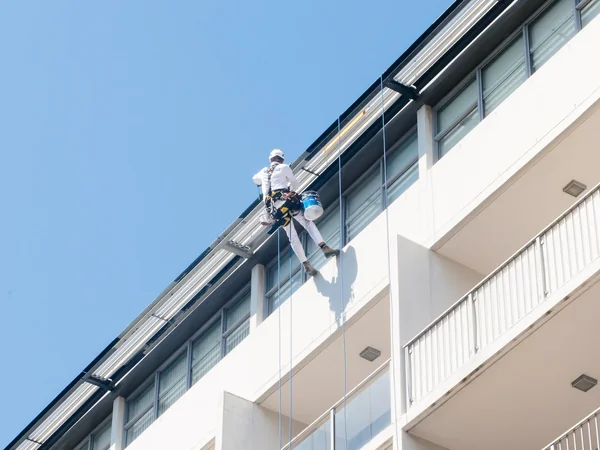
Rope access typically requires no footpath closure and can be rigged and de-rigged from the roof each day, which is why it is the most common method for occupied high-rise buildings in Sydney's inner suburbs. Safe Work Australia's guide to managing risks of industrial rope access systems sets out the anchor testing, exclusion zones and technician competency requirements every rope access provider must follow. Scaffold remains the right choice where extensive render repair or surface preparation is needed across a whole elevation. In these cases, Safe Work Australia's scaffolding safety guidance governs licensing and Safe Work Method Statement (SWMS) requirements.
How to plan the timeline for a high-rise exterior repaint

A high-rise repaint timeline is built backwards from the building's constraints, not forwards from a preferred start date. The sequence below reflects how Premier Painting's Project Managers plan a typical high-rise project:
- Pre-paint inspection: assess substrate condition, identify defects such as cracking, efflorescence or corrosion, and confirm the scope before any access method is chosen.
- Access method selection: match the method to the building using the factors above, and confirm anchor points or ground clearance requirements.
- Council and permit checks: footpath closures, hoarding or traffic management plans may be required for scaffold or EWP work on public streets.
- Elevation sequencing: plan the order of facades to follow weather patterns, minimise repeat mobilisation, and keep at least one building face fully accessible at all times.
- Resident and tenant notification: schedule written notices ahead of works commencing on each section, not just at project kick-off.
- Weather contingency buffer: build in float days, particularly across NSW's storm season, so a wet week does not cascade into the next stage.
- Final inspection and handover: a formal sign-off against the original scope, with any defects addressed before demobilisation.
Pro tip: Sydney's south and west-facing elevations are typically the last to bleach and fade, but they are also often the last accessible due to prevailing wind exposure. Sequencing the more weather-exposed elevations first, rather than working through the building alphabetically or by convenience, reduces the number of weather delays across the whole project.
Premier Painting's rope access services are scoped by a dedicated Project Manager who assesses the right access method for your building before recommending it, not the other way around.
Managing disruption for residents, tenants and the public
Minimising disruption starts with communication, not just scheduling. Residents and tenants need to know which section of the building is being worked on, when, and what it means for their access to balconies, parking and common areas, not just a single notice at the start of the project.
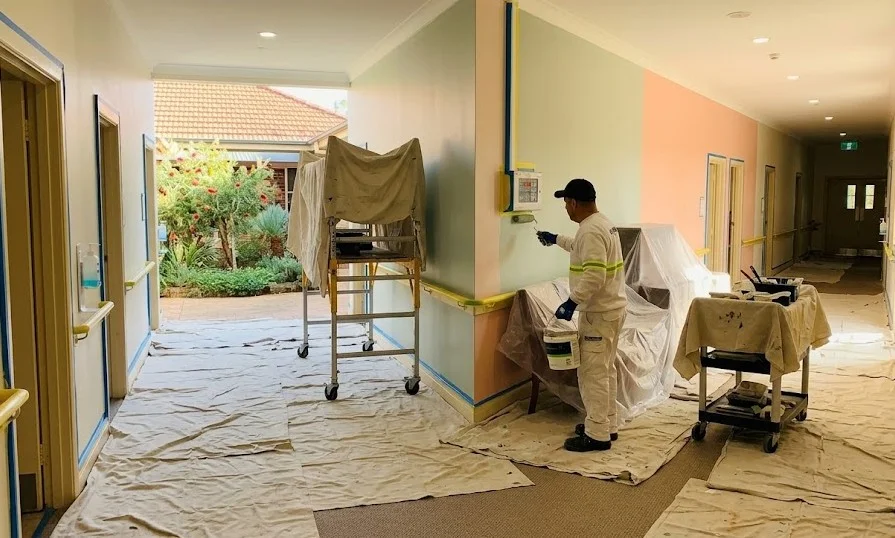
For occupied strata buildings, the most common disruption points are balcony access (residents need advance notice before their balcony becomes a work zone), visitor and resident parking (particularly where scaffold or EWP requires ground clearance) and noise-sensitive periods for buildings with shift workers or home-based tenants. A written staging plan showing which elevation is being worked on each week gives strata managers a document to share directly with residents, rather than fielding individual questions as the project moves around the building. It is one of the reasons owners corporations continue to approve strata painting services from a contractor who has managed their building before.
For commercial and government buildings, the same principle applies to tenants and the public: work zones should be clearly signed and communicated in advance, and any method requiring footpath or street impact should have a confirmed traffic management plan before mobilisation.
What compliance documentation should be in place before work starts?
Before any access method is used on a high-rise building, the contractor should be able to provide a Safe Work Method Statement (SWMS), evidence of current technician certification (IRATA for rope access, tickets for EWP and scaffold operators) and confirmation of public liability insurance covering work at height. For government, heritage and education or childcare-adjacent sites, background-screened staff are often required as well.
Premier Painting provides full WHS documentation and CM3-accredited safety systems on every high-rise project, and every job carries the same 7-year workmanship warranty regardless of which access method is used. Compliance documentation should be confirmed before a quote is accepted, not requested after work has started.
TL;DR: High-Rise Exterior Repaint Planning at a Glance
- Match the access method (rope access, EWP, swing stage or scaffold) to the building's height, facade and streetscape, not to what the contractor sells.
- Rope access typically causes the least ground-level disruption and requires no footpath closure; scaffold remains necessary for extensive render repair.
- Build the project timeline backwards from council permits, weather contingency and elevation sequencing, not just a start date.
- Written staging plans and advance resident notices reduce complaints far more than a single project-start notice.
- Confirm SWMS, technician certification and insurance before accepting a quote, not after work begins.
- Next step: contact Premier Painting for a free quote. Call 1300 916 291 or request a quote online.
Frequently Asked Questions
How long does a high-rise exterior repaint take?
Timelines vary with building height, facade complexity and access method, but most high-rise exterior repaints across Sydney and the Central Coast run from several weeks to a few months. Weather is the biggest variable: NSW's storm season can extend a project if float days are not built into the schedule. A detailed pre-paint inspection gives the most accurate timeline for your specific building.
Is rope access safe for painting high-rise buildings?
Yes, when performed by IRATA-certified technicians following anchor testing and exclusion zone protocols. Industrial rope access is a widely used and well-regulated method for high-rise work in Australia, governed by Safe Work Australia guidance on managing rope access risks. Premier Painting's rope access painters are IRATA-certified and supervised by a dedicated Project Manager on every job.
Do I need council permits for scaffolding on a high-rise repaint in NSW?
If scaffold or hoarding will occupy a public footpath or affect traffic, most NSW councils require a permit or a traffic management plan before installation. Requirements vary by council and site, so this should be confirmed during project planning, not left until scaffold delivery is booked. Rope access rarely requires footpath permits since it does not occupy ground-level space.
What is the difference between rope access and swing stage painting?
Rope access uses ropes and IRATA-certified technicians to work directly on the facade, with minimal ground footprint and fast daily rigging. A swing stage is a suspended platform that stays in position for sustained work on one section of a building. Rope access suits complex facades and occupied buildings; swing stage suits flatter elevations needing extended work in one area.
How much notice should residents get before a high-rise repaint starts?
There is no single statutory notice period for external repaint works under NSW strata legislation, but industry best practice, and what Premier Painting builds into every strata proposal, is written notice at least two weeks before work begins, followed by section-specific notices as the work moves around the building.
Get a Free Assessment for Your High-Rise Repaint
Premier Painting's Project Managers assess the right access method for your high rise building exterior painting project before recommending a scope. Call 1300 916 291 or request a free quotation online to arrange a site assessment.
Related Resources
- Our Rope Access Services
- Our Strata Property Painting Services
- Abseiling vs Scaffolding: Which Is Better for Buildings?
- The Benefits of Abseiling Painters for Commercial Projects
- Strata Painting Timing: How to Avoid Resident Disruption
About Premier Painting Company: Premier Painting has delivered commercial, strata and residential painting across Sydney, the Central Coast and Wollongong for 28+ years. Dulux Accredited Painters, a member of Master Painters Australia, CM3-accredited, IRATA-certified for rope access work, and a recognised Strata Services Specialist Company. Contact us on 1300 916 291 or visit premierpainting.com.au.







.png)

.png)