Painting Healthcare Facilities in Sydney: Guide for Facility Managers
By Tony Conway, Managing Director, Premier Painting Company
Quick answer: Healthcare facility painting in Sydney requires non-porous, easily cleanable finishes, low-VOC paint systems, and a contractor who can work around live patient care. Premier Painting has delivered healthcare and commercial painting projects, including Liverpool Private Hospital, across Sydney for 28+ years, applying Dulux Accredited paint systems with a 7-year workmanship warranty and out-of-hours scheduling.
A hospital corridor or clinic waiting room takes far more daily wear than a typical office, and it cannot simply close for a fortnight while painting works are carried out. Healthcare facility painting in Sydney has to satisfy two demands at once: finishes that meet infection control standards, and a work program that does not interrupt patient care. For facility managers scoping a repaint, understanding what changes when the building is a hospital rather than a standard office is the first step to a workable proposal.
What Makes Healthcare Facility Painting Different From Standard Commercial Painting?
Healthcare facility painting differs from standard commercial painting in three ways: surfaces must meet infection prevention and cleanability requirements, paint systems must be low-VOC and safe around patients, and the works program must accommodate a building that rarely closes.
An office or retail fitout can usually be scheduled around business hours. A hospital or clinic rarely has that luxury: corridors and wards may stay in active use throughout, and airborne particulates, odours, and noise carry real consequences for patients with compromised immunity. A commercial painting contractor here needs infection control awareness and the project management discipline to sequence work around clinical schedules, not the other way around.
Which Paint Systems Are Suitable for Hospitals and Medical Clinics?
The most suitable paint systems for hospitals and medical clinics are washable, low-VOC acrylic and enamel systems formulated for high-frequency cleaning, with antimicrobial or hygiene-rated topcoats used in higher-risk clinical areas such as treatment rooms and isolation wards.
Facility managers should ask which systems are independently certified low-VOC, since off-gassing affects reoccupation timing. Products certified against Good Environmental Choice Australia's Paints & Coatings Standard are assessed against VOC and toxicity criteria, giving a documented basis for specification. Premier Painting applies Dulux Accredited systems and selects low-VOC, hygiene-rated products for clinical areas, following the manufacturer's data sheet for preparation and cure time.
How Do Surfaces and Finishes Need to Meet Infection Control Standards?
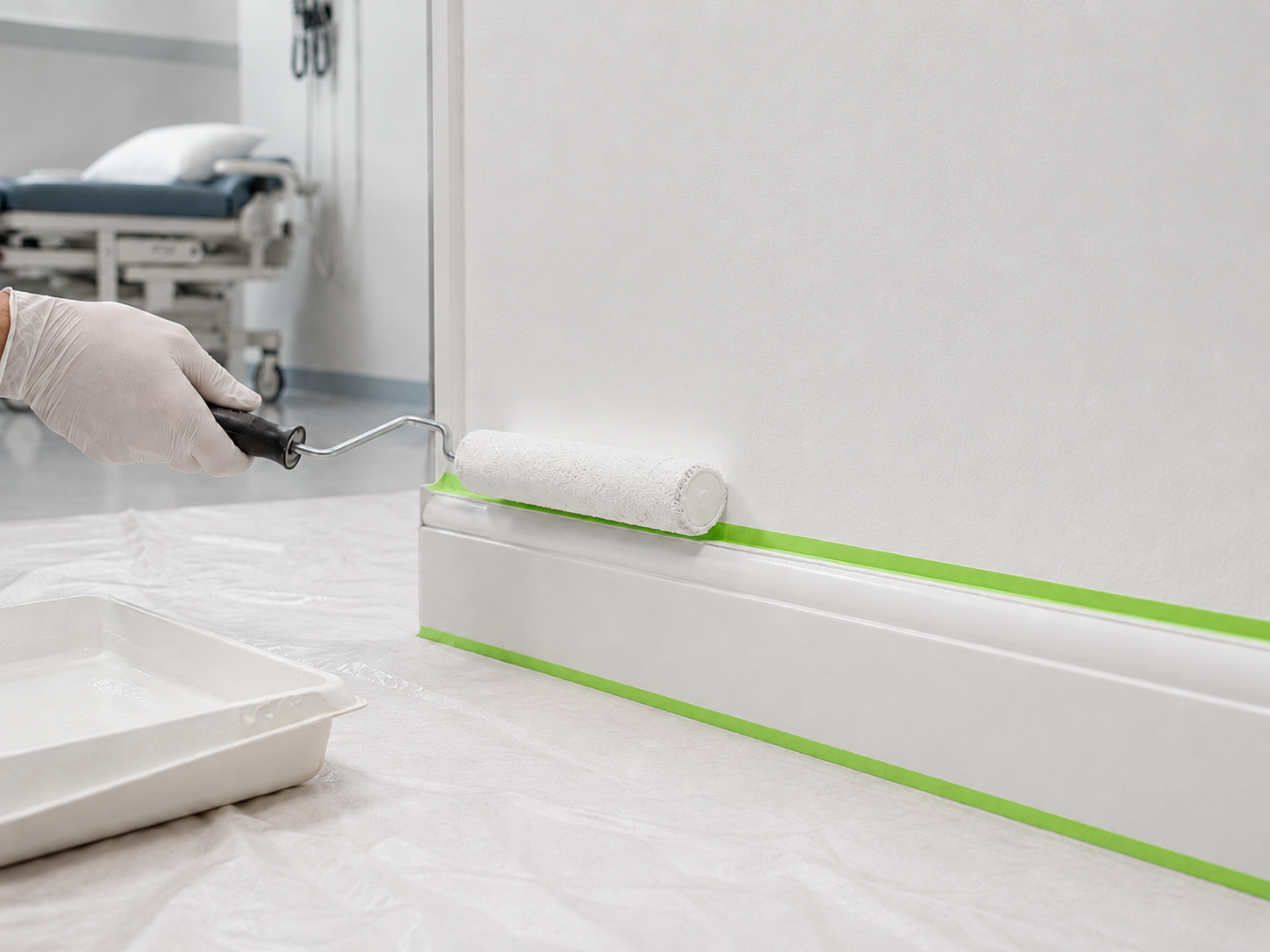
Surfaces in patient care areas need to be smooth, impervious, and easily cleanable, with joints and gaps sealed so moisture, dust, and soil cannot accumulate, as set out in the Australasian Health Facility Guidelines for infection prevention and control.
The Australasian Health Facility Guidelines, Part D: Infection Prevention and Control, are the reference document used across Australian health facility design. Wall finishes should be smooth, easily cleaned, and water-resistant near plumbing fixtures, with skirting, floor, and wall joins sealed and free of gaps. For a painting contractor, this means surface preparation that seals joints properly before the topcoat goes on, rather than painting over a gap and leaving the underlying risk in place.
Pro tip: Colour and sheen level get most of the attention in a healthcare repaint brief, but surface preparation, particularly sealing skirting and wall joints, is what actually satisfies an infection control audit. A beautiful finish over an unsealed joint will still fail inspection.
How Are Painting Works Scheduled Around a Live Healthcare Facility?
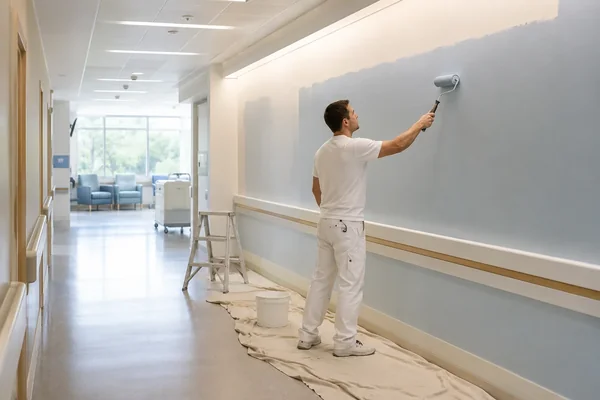
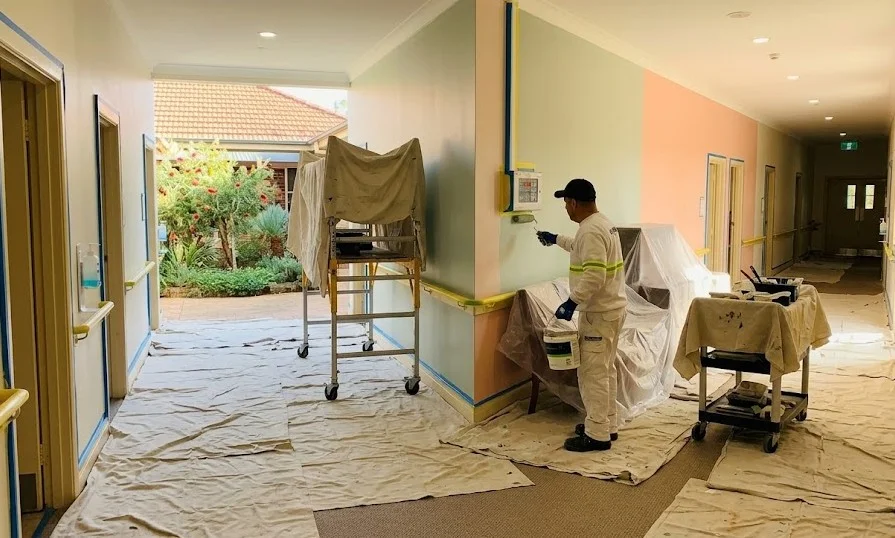
Painting works in an operating hospital or clinic are typically staged after hours or ward-by-ward, so patient care areas stay open throughout the project.
Low-odour, fast-curing paint systems reduce how long an area needs to stay closed, which matters when a ward bay needs to be back in service by morning. A dedicated Project Manager and Supervisor sequences the work with facility management, confirms access windows in advance, and adjusts the program if a ward needs longer than planned. It's the same project management approach Premier Painting applies across its commercial portfolio, adapted to a healthcare site's tighter access constraints.
What Compliance and Safety Requirements Apply to Painting Contractors in Healthcare Settings?
Painting contractors in healthcare facilities must manage hazardous chemicals under SafeWork NSW's code of practice, hold accreditation such as CM3, and provide safety documentation before work begins.
Any contractor bringing solvent-based products onto a healthcare site must manage them under SafeWork NSW's code of practice for managing risks of hazardous chemicals in the workplace, including current safety data sheets and adequate ventilation. Premier Painting is CM3-accredited and WHS compliant, providing Safe Work Method Statements as standard for every healthcare and government project.
Scoping a repaint for a hospital, clinic, or aged care facility? Premier Painting's commercial painting services include a dedicated Project Manager and Supervisor on every healthcare project.
How Does Colour Choice Affect a Healthcare Environment?
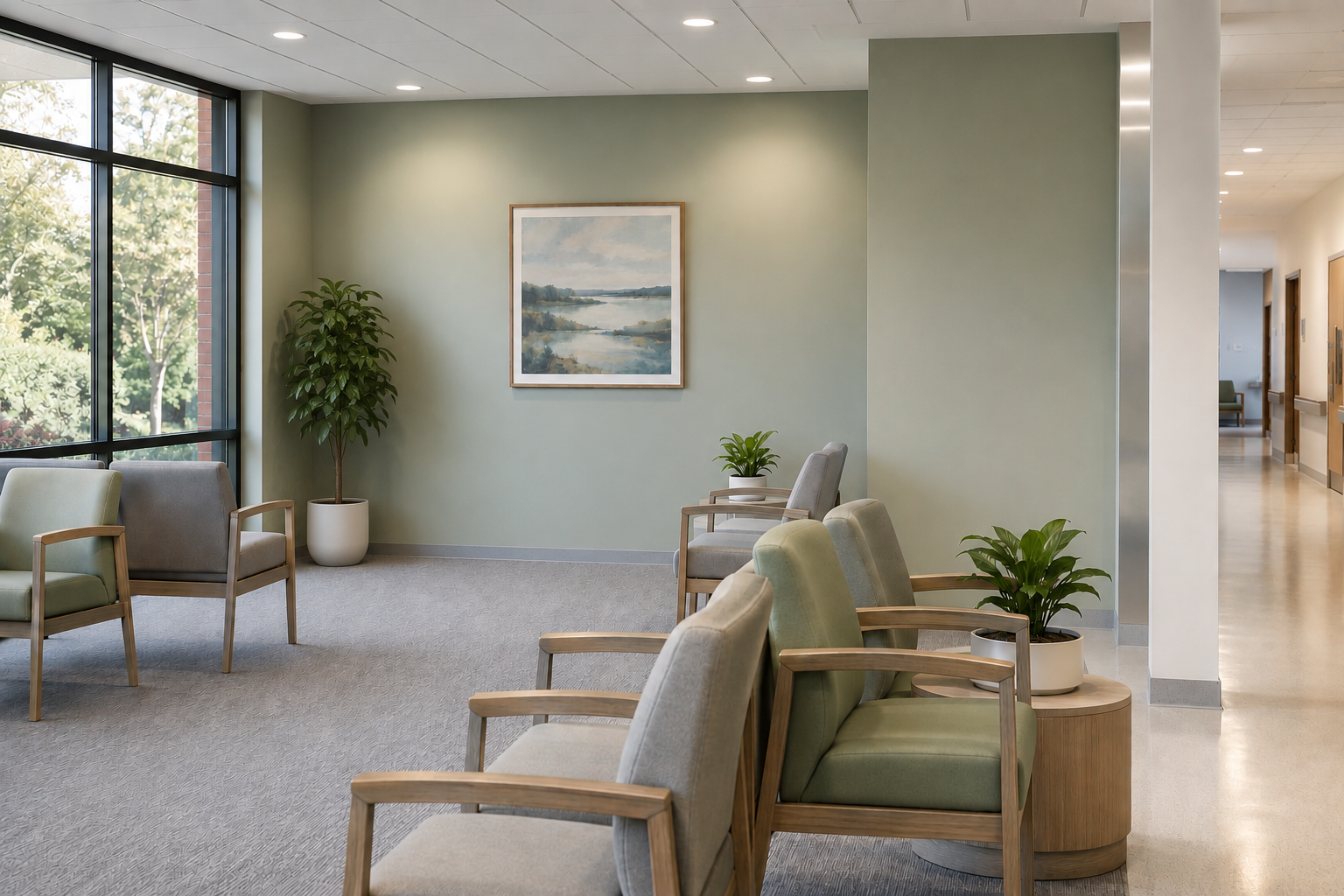
Colour choice affects more than appearance: calmer, muted tones in patient-facing areas support a less clinical environment, while stronger contrast in corridors and wayfinding zones helps patients and visitors navigate the building.
Australian healthcare design generally favours soft, muted palettes in wards and waiting areas, reserving stronger colour and contrast for wayfinding elements such as corridor markers and signage. Getting this right at specification stage avoids a repaint purely on aesthetic grounds. Premier Painting can refer clients to a qualified colour consultant, in line with NHMRC guidance on hygienic, healthy environments.
Why Sydney Facility Managers Choose Premier Painting for Healthcare Projects
Premier Painting has delivered painting works at Liverpool Private Hospital, alongside institutional clients such as Government House and NSW Parliament. Every healthcare project has a dedicated Project Manager and Supervisor, a 7-year workmanship warranty, and a 10-year Dulux manufacturer warranty where specified, across Sydney, the Central Coast, and Wollongong.
TL;DR — Healthcare Facility Painting in Sydney at a Glance
- Surfaces in patient care areas must be smooth, impervious, and easily cleanable, with sealed joints, per the Australasian Health Facility Guidelines.
- Paint systems should be low-VOC, washable, and hygiene-rated for high-risk clinical zones.
- Works are typically staged after hours or ward-by-ward so the facility stays operational.
- Contractors must manage hazardous chemicals under SafeWork NSW's code of practice and hold accreditation such as CM3.
- Colour palette affects patient experience and wayfinding.
- Next step: contact Premier Painting for a free quote → 1300 916 291 or request a free quotation online
Get a Painting Proposal for Your Healthcare Facility
Premier Painting provides detailed, itemised proposals for hospitals, clinics, and aged care facilities across Sydney, the Central Coast, and Wollongong. Call us on 1300 916 291 or request a free quotation online.
Frequently Asked Questions
What is the best paint for healthcare facility walls in Australia?
The best paint for healthcare facility walls in Australia is a washable, low-VOC acrylic or enamel system that meets the smooth, impervious and easily cleanable surface requirements set out in the Australasian Health Facility Guidelines. In higher-risk clinical zones such as treatment rooms, a hygiene-rated or antimicrobial topcoat is typically specified over a standard system.
What paint types are best for hospital hygiene and infection control?
Satin or semi-gloss enamel and specialist antimicrobial coatings are generally best for hospital hygiene, since their non-porous surface withstands frequent disinfectant cleaning without breaking down. Matt finishes are avoided in clinical areas because their textured surface is harder to wipe clean and can retain soil or moisture over time.
What are durable, easy-to-clean paint options for medical clinics?
Durable, easy-to-clean options for medical clinics include washable low-sheen acrylics for general areas and water-resistant enamel for wet areas such as clinical kitchens and bathrooms. Dulux Accredited systems applied with correct surface preparation typically carry manufacturer warranties of up to 10 years, on top of Premier Painting's 7-year workmanship warranty.
How do you choose an antimicrobial paint for a healthcare environment?
Choosing an antimicrobial paint starts with identifying which areas genuinely need it, typically treatment rooms, isolation wards and high-touch surfaces, since antimicrobial topcoats add cost and are not required throughout a whole facility. The product should carry independent test data for the organisms of concern and be compatible with the facility's approved cleaning and disinfection regime.
Can painting works be carried out in a hospital or clinic without disrupting patient care?
Yes. Painting works in an operating hospital or clinic are typically staged after hours, overnight, or ward-by-ward, using low-odour paint systems that allow faster reoccupation. Premier Painting's Project Managers plan access windows around clinical schedules before work begins, so patient care areas remain open throughout the project.
How often should a Sydney healthcare facility be repainted?
Repaint frequency depends on how a space is used: high-traffic corridors, treatment rooms and wet areas facing constant cleaning and disinfectant exposure typically need attention well before quieter admin or office areas in the same building. A maintenance painting schedule, assessed during a pre-paint inspection, is the most cost-effective way to plan for this rather than waiting for visible paint failure.
Related Guides
- 7 steps to a flawless commercial paint finish
- Low-VOC paints for commercial spaces
- Colour psychology in commercial and strata painting
About Premier Painting Company: Premier Painting has delivered commercial, healthcare, strata, and residential painting across Sydney, the Central Coast, and Wollongong for 28+ years. Dulux Accredited Painters, CM3-accredited, with a dedicated Project Manager and Supervisor on every project and a 7-year workmanship warranty. Call 1300 916 291 or visit premierpainting.com.au.







.png)

.png)