Interior vs Exterior Painting: What Sydney Homeowners Need to Know Before Booking
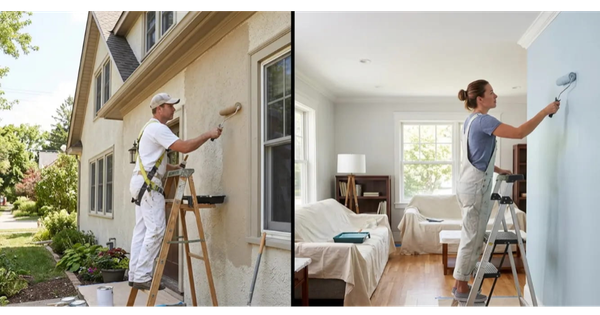
Whether you’re freshening up the living room or repainting the front facade after a Sydney summer, booking a professional painter starts with one fundamental question: are you dealing with an interior or exterior job — and does it actually matter?
The short answer is yes, it matters a great deal. Interior and exterior painting are two distinct disciplines involving different products, preparation methods, environmental conditions, and timelines. Understanding the difference helps you scope your project accurately, budget correctly, and choose a painter with the right expertise for the job.
Here’s what every Sydney homeowner should know before picking up the phone.
The Difference Between Interior and Exterior Painting in Sydney
At a basic level, the difference between interior and exterior painting comes down to what each surface is exposed to. Interior surfaces live in a controlled environment — stable temperature, no UV exposure, no rain. Exterior surfaces face everything Sydney’s climate throws at them: intense summer sun, salt air near the coast, humidity, heavy rain, and temperature swings from season to season.
That’s why interior and exterior paints are engineered differently. It’s also why the preparation, application techniques, and timing requirements for each job are quite different — and why using the wrong product or approach can lead to costly failures.
Interior vs Exterior Paint: What’s Actually Different?
Exterior Paint: Engineered for Weathering
Exterior paints are formulated to withstand prolonged exposure to UV radiation, moisture, and temperature fluctuation. Key characteristics include:
- Higher levels of UV-resistant pigments to resist fading and chalking
- Flexible binders that expand and contract with the substrate as temperatures change
- Mould and mildew inhibitors, particularly important in Sydney’s humid coastal conditions
- Higher VOC (volatile organic compound) content in some formulations — not suitable for enclosed indoor spaces
- Greater resistance to surface chalking, dirt pick-up, and moisture penetration
Premium exterior paint systems such as the Dulux Weathershield and Acratex ranges are designed specifically for the Australian climate and are a standard specification on quality exterior painting projects.
Interior Paint: Formulated for Comfort and Finish Quality
Interior paints prioritise different performance characteristics:
- Low or zero VOC formulations for indoor air quality and safety
- Superior washability and scrub resistance for walls subject to daily wear and tear
- Optimised for smooth, consistent finish quality in controlled lighting conditions
- Wide range of sheens from flat/matte through to semi-gloss, each suited to specific rooms or surfaces
- Not formulated to handle UV exposure, rain, or thermal cycling — will fail rapidly outdoors
Interior paints are not a lesser product — they’re simply optimised for a completely different set of conditions.
Surface Preparation for Interior and Exterior Painting in Sydney
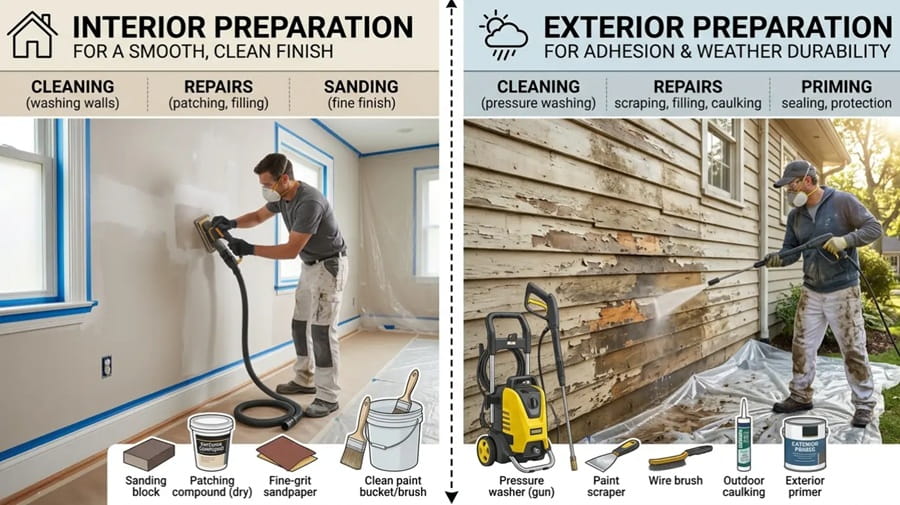
One of the most significant differences between interior and exterior painting projects is the preparation required. For both, proper surface preparation is what separates a paint job that lasts from one that peels, bubbles, or fades within a few years.
Exterior Preparation
Exterior surfaces typically require more intensive preparation because they’ve been exposed to the elements. Standard preparation steps for an exterior residential painting project in Sydney include:
- High-pressure water cleaning to remove dirt, grime, salt deposits, and loose paint
- Scraping and sanding of any loose, peeling, or flaking paint
- Patch rendering or gap-filling for cracks, holes, and deteriorated render
- Treatment of any mould, algae, or biological growth
- Application of appropriate primer or sealer before top-coat
- Lead paint testing and management for homes built before 1980 — a legal compliance requirement
Skipping or rushing preparation on an exterior job is the primary cause of paint failure. A quality painter will spend considerable time on this stage.
Interior Preparation
Interior preparation is typically less extensive, but no less important:
- Cleaning surfaces to remove grease, dust, and grime (particularly in kitchens and bathrooms)
- Filling holes, cracks, and nail pops with appropriate filler
- Light sanding to key the existing surface and smooth filler patches
- Masking and protecting floors, fixtures, and furnishings
- Priming bare or patched areas to ensure uniform absorption
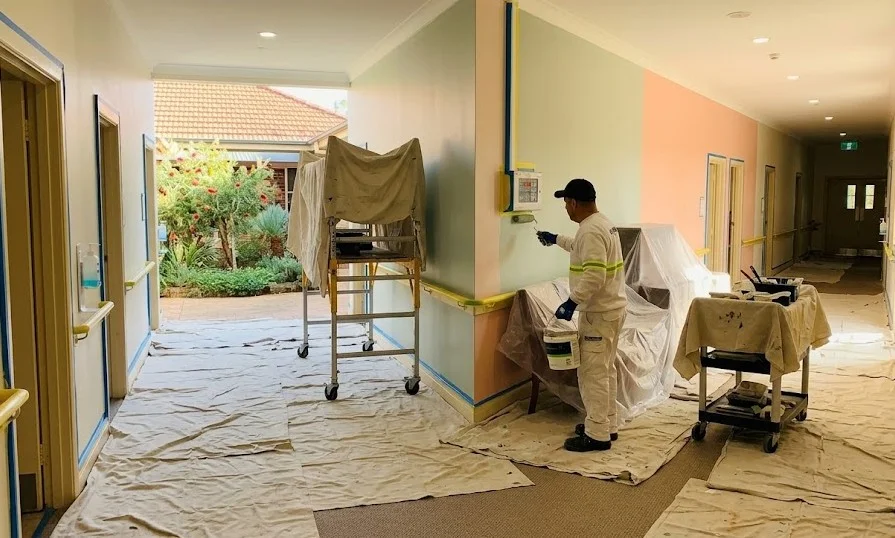
Interior preparation also involves protecting your belongings. A professional painter will move and cover furniture, lay drop sheets, and ensure your home is left clean and tidy at the end of each day.
When to Paint: Sydney Weather and Timing for Exterior Painting
Exterior painting in Sydney is weather-dependent in a way that interior painting simply isn’t. Paint needs to be applied within certain temperature and humidity ranges to adhere correctly, cure properly, and achieve the stated performance characteristics.
As a general rule, exterior paint should not be applied when temperatures are below 10°C or above 35°C, when rain is forecast within 24 hours, or when surfaces are wet from overnight condensation or dew. In Sydney, this generally makes autumn and spring the most reliable seasons for exterior work, though experienced painters will work year-round with appropriate scheduling and monitoring.
Interior projects are far more flexible — they can proceed in any season and are largely unaffected by the weather outside. This makes interior painting easier to schedule around your household routine.
Sheen and Finish: Different Priorities Inside and Out
Sheen selection — the level of gloss in a paint finish — serves different functional purposes on interior versus exterior surfaces.
For interior walls, sheen levels are typically chosen based on the room’s function and desired aesthetic. Flat or low-sheen finishes suit living areas and bedrooms where a soft, non-reflective look is preferred. Semi-gloss and gloss are used in kitchens, bathrooms, and on trims and doors where washability and moisture resistance matter most.
For exterior surfaces, sheen selection is more technically driven. A low-sheen finish on weatherboard or rendered walls is typical, as higher gloss tends to highlight imperfections and can make temperature-related expansion and contraction more visible. Gloss is standard on exterior timberwork, gutters, fascias, and doors. Your painter should guide you on the appropriate sheen for each substrate.
Colour Selection: Practical Considerations for Sydney Homes
Interior colour selection is largely a personal choice driven by aesthetics, room size, lighting, and mood. The practical considerations are minimal — any colour in the right product will perform adequately inside.
Exterior colour selection involves more practical factors. Dark colours absorb more heat, which can stress the paint film and underlying substrate, particularly on north-facing walls receiving intense direct sun. Some strata buildings and heritage properties have colour restrictions that must be observed. In coastal areas, UV fade-resistance should be a priority in selecting both the colour and paint grade.
Premier Painting offers qualified colour consultant referrals and digital colour preview imaging to help homeowners visualise their exterior colour before committing — particularly useful for larger projects where the stakes are higher.
Pricing: Why Interior and Exterior Jobs Are Costed Differently
Exterior painting projects typically carry a higher cost per square metre than interior work, for several reasons. Preparation is more intensive. Access equipment may be required — ladders, scaffolding, or elevated work platforms. Weather windows constrain scheduling and may require remobilisation. And the paint systems themselves tend to be more expensive given the higher performance specifications required.
For Sydney residential projects, typical project values range from $5,000 to $30,000+ depending on the scope, size of the property, condition of existing surfaces, and access requirements. Getting a detailed, itemised quote from a qualified painter is the only reliable way to understand what your specific project will cost.
What Sydney Homeowners Should Know About Interior and Exterior Painting
Sydney’s climate and housing stock create a few specific considerations that homeowners should be aware of:
- Coastal salt air: Properties within a few kilometres of the coast experience accelerated paint degradation due to airborne salt. Higher-specification exterior paint systems and more frequent maintenance cycles are advisable.
- Lead paint in older homes: Homes built before 1980 are likely to have lead-based paint somewhere on the property. Sanding or scraping without proper precautions creates a serious health hazard. Any painter working on pre-1980 homes should be trained and compliant with AS/NZS 4361.2. Premier Painting holds this specialist capability.
- Terracotta and face brick: Not all exterior surfaces are painted. If you’re considering painting previously unpainted brick or render, additional preparation and specialist primer systems are required.
- Heritage and character homes: Some properties in Sydney’s inner suburbs fall under heritage overlay or character controls. Certain colours or finishes may be restricted. Always check with your local council before committing to an exterior colour scheme.
Questions to Ask Before Booking an Interior or Exterior Painter in Sydney
Whether your project is interior, exterior, or both, ask any prospective painter the following before signing a quote:
- Are your painters direct employees or subcontractors?
- Are you Dulux Accredited or a member of Master Painters Australia?
- Do you have a dedicated Project Manager assigned to my job?
- What paint systems and brands will you be using — and why?
- What does your preparation process involve?
- What warranty do you provide on workmanship?
- Are you WHS compliant, and are your workers insured?
- For older homes: are you trained in lead paint management?
A reputable, established painting company should be able to answer all of these questions confidently and in detail.
Ready to Book? Start With a Free Quote
Premier Painting has delivered interior and exterior painting services across Sydney, the Central Coast, Newcastle, and Wollongong since 1997. All painters are direct employees, every project has a dedicated Project Manager, and all work is backed by a 7-year workmanship warranty. Call 1300 916 291 or request a free quote at premierpainting.com.au/request-a-quote.
Frequently Asked Questions
Is there really a difference between exterior and interior paint?
Yes — a significant one. Exterior paints are engineered with UV-resistant pigments, flexible binders, and mould inhibitors to handle weathering. Interior paints prioritise low VOC content, washability, and finish quality in a stable, controlled environment. They’re not interchangeable, and using the wrong product will result in premature failure.
What happens if I use interior paint on the exterior?
It will fail quickly. Without UV-resistant additives, the paint will fade and chalk within a season or two. Without flexible binders, it will crack and peel. Without mould inhibitors, biological growth will take hold on damp surfaces. In Sydney’s climate, expect visible deterioration within 12 to 18 months — compared to 8 to 12 years from a quality exterior system.
Can I use exterior paint on the inside of my front door?
Use interior paint (semi-gloss or gloss) on the interior face of a front door — it’s in a controlled environment and benefits from interior paint’s washability and low VOC characteristics. The exterior face, if exposed to weather, should be finished with an exterior-grade gloss. A professional painter will treat each face appropriately.
Can you use normal paint on outside walls?
Not if you want it to last. Standard interior paint will not hold up on surfaces exposed to UV, moisture, and temperature fluctuation. For exterior walls in Sydney, a quality exterior acrylic system — or texture coating on rendered surfaces — is the correct product. The right system depends on substrate type, weathering exposure, and any existing adhesion or moisture issues.
Can I turn interior paint into exterior paint?
No. The two products have fundamentally different chemical compositions — there are no additives that can give interior paint the UV resistance, flexibility, or moisture protection of an exterior formulation. If you have leftover interior paint and are considering using it outside: don’t. The cost of repainting after failure will outweigh any short-term saving.
What will happen if you use interior paint outside?
Expect rapid fading, chalking, cracking, and peeling as the paint can’t flex with substrate movement. Mould and algae growth are also likely on damp surfaces. In Sydney’s climate — high UV, coastal humidity, summer heat — these problems appear faster than they would in more temperate conditions.
How long does exterior paint last in Sydney?
A quality exterior paint system, professionally applied over properly prepared surfaces, should last 8 to 12 years in Sydney conditions. Coastal properties may be at the shorter end of that range due to salt air. Poor preparation or low-grade products can reduce that to 3 to 5 years. Annual washing and prompt touch-ups to damaged areas will extend any paint job’s lifespan.
How long does interior paint need to dry before I can use the room?
Most interior acrylics are touch-dry within one to two hours and re-coatable after four. Full cure — maximum hardness and washability — takes two to four weeks. Avoid scrubbing freshly painted surfaces during this period. Your painter should advise on the specific dry and cure times for the products used.
When is the best time of year to paint the exterior of a house in Sydney?
Autumn and spring are the most reliable seasons — temperatures are within the ideal application range, humidity is stable, and weather is less disruptive. Summer painting is possible with careful scheduling to avoid peak heat, particularly on north and west-facing surfaces.
Do I need to move furniture before the painters arrive?
Clear small items, ornaments, and anything fragile before your painters arrive. Large furniture is typically moved and covered by the painting team as part of their preparation. A professional crew will lay drop sheets, mask fixtures, and leave your home tidy at the end of each day. If you’re unsure what to move, ask at the quoting stage.
Does the same painting company need to do both interior and exterior work?
Not a requirement, but using the same company for both means better coordination, consistent standards, and a single point of accountability. If you’re doing a full property repaint, one experienced team managing the whole scope is generally simpler and more reliable. Ask any prospective painter whether they handle both with their own employed team, or whether they subcontract either component.







.png)

.png)